
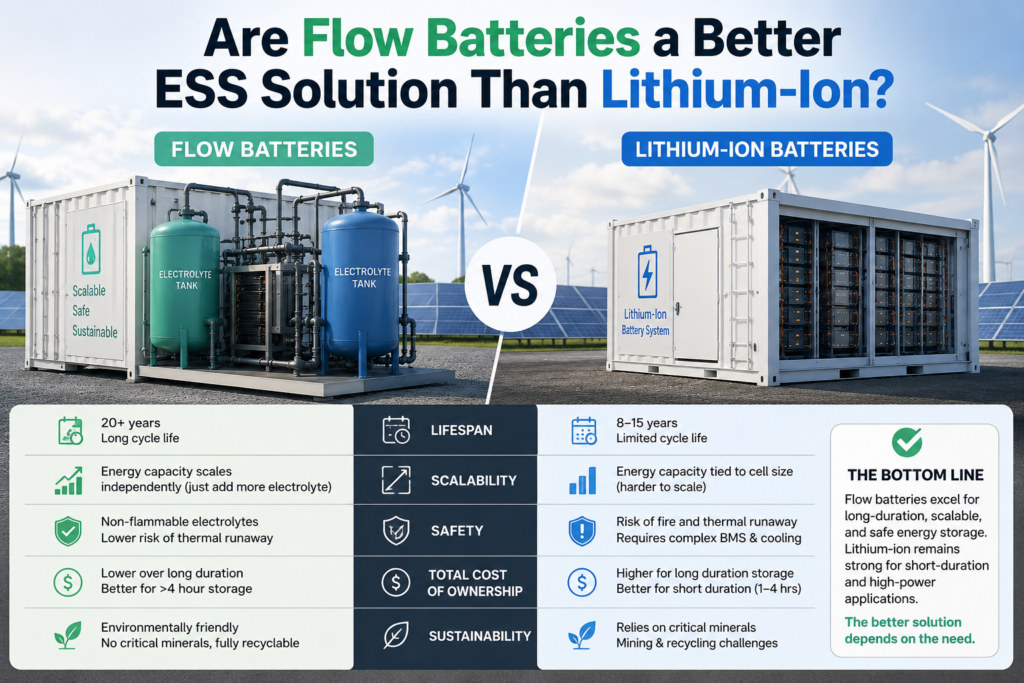
Are Flow Batteries a Better ESS Solution Than Lithium-Ion?
Table of Contents
What if the energy storage system you’ve invested millions in starts degrading—quietly, steadily—just a few years into your 20-year project? As global demand for reliable, long-duration energy storage accelerates, a growing number of utility developers, industrial operators, and renewable energy investors are confronting a question they can no longer ignore: is lithium-ion still the right ESS platform, or have flow batteries finally crossed the threshold to become a superior choice? The answer isn’t binary—but getting it right before your next procurement decision could define your project’s ROI, operational safety, and long-term sustainability.
⚑ QUICK ANSWER
1. The ESS Market Is at an Inflection Point
The global energy storage market is growing at a compound annual growth rate (CAGR) exceeding 20%, driven by the rapid expansion of solar and wind capacity worldwide. As intermittent renewable energy continues to replace conventional baseload generation, the need for long-duration, reliable, and cost-effective energy storage has never been more urgent.
For years, lithium-ion batteries—the same chemistry powering smartphones and electric vehicles—dominated the ESS market. They offered the best available combination of energy density, cost, and supply chain maturity. But as projects scale up, discharge durations lengthen, and safety incidents at lithium-ion installations draw regulatory scrutiny, a growing number of engineers, procurement managers, and investors are taking a serious look at flow batteries as a viable alternative.
Understanding which technology is right for your specific project isn’t just a technical exercise—it’s a strategic business decision with long-term financial consequences.
2. What Are Flow Batteries? A Plain-English Explanation
A flow battery is an electrochemical energy storage system that stores energy in liquid electrolyte solutions held in external tanks. Unlike lithium-ion batteries—where energy is stored within solid electrode materials—flow batteries separate the energy storage medium (the electrolyte) from the power-generating components (the electrochemical cell stack).
The most commercially mature flow battery chemistry today is the Vanadium Redox Flow Battery (VRFB), which uses vanadium ions in different oxidation states dissolved in a sulfuric acid solution as both the positive and negative electrolytes.
How It Works
- During charging, electrical energy changes the valence state of vanadium ions in the electrolyte.
- During discharging, the reverse reaction releases stored electrical energy to the grid or load.
- The electrolyte is continuously pumped from external tanks through the cell stack, where the electrochemical reaction occurs.
Because energy storage capacity is determined by how much electrolyte is available (tank size), and power output is determined by the cell stack, these two parameters can be scaled independently—a fundamental design advantage that lithium-ion cannot replicate. Other flow battery chemistries in commercial development include iron-chromium, zinc-bromine, and all-iron flow batteries, but VRFBs dominate current utility-scale deployments due to their maturity and cycle stability.
3. Lithium-Ion in ESS Applications: The Incumbent Standard
Lithium-ion batteries have dominated ESS deployments for good reason. They are energy-dense, modular, well-understood, and benefit from a massive global manufacturing base that has driven costs down significantly over the past decade. In utility-scale ESS, lithium iron phosphate (LFP) chemistry is now the preferred variant, offering improved thermal stability and a longer cycle life compared to older lithium-ion chemistries.
Key Strengths of Lithium-Ion ESS
- High energy density: 150–250 Wh/kg, enabling compact installations
- Lower upfront capital cost: approximately $200–$350/kWh at the system level
- Compact footprint: ideal for space-constrained urban or rooftop sites
- Shorter lead times and faster deployment compared to custom flow battery installations
- Mature supply chain with established performance data and bankability
- Strong suitability for short-duration applications (1–4 hours), including frequency regulation and peak shaving
However, lithium-ion ESS systems carry a set of limitations that become increasingly significant as projects scale in size, discharge duration, and required operational lifespan. Understanding these limitations is essential before committing to a technology for a 20+ year infrastructure project.
4. Head-to-Head Comparison: Flow Battery vs. Lithium-Ion ESS
The table below summarizes the key dimensions across which these two technologies diverge most significantly for ESS applications.
| Criteria | Flow Battery (VRFB) | Lithium-Ion (LFP) |
| Cycle Life | 20,000+ cycles | 3,000–6,000 cycles |
| Discharge Duration | 4–12+ hours (scalable) | 1–4 hours (standard) |
| Round-Trip Efficiency | 65–82% | 90–95% |
| Energy Density | 15–35 Wh/L | 150–250 Wh/kg |
| Thermal Runaway Risk | None (non-flammable) | Yes (thermal runaway possible) |
| Capacity Degradation | Negligible (electrolyte stable) | ~20% over 3,000–6,000 cycles |
| Scalability | Power & energy independent | Coupled; modular |
| Upfront CapEx ($/kWh) | $400–$600 | $200–$350 |
| 20-yr TCO | Competitive at 6+ hr daily | Lower for <4 hr applications |
| Electrolyte Residual Value | Yes (vanadium commodity) | Minimal |
4.1 Cycle Life and Capacity Degradation
This is where the performance gap between technologies becomes most consequential. Lithium-ion batteries degrade with every charge-discharge cycle. Even the most durable LFP chemistry loses meaningful capacity over time—typically reaching 80% of its original capacity after 3,000–6,000 cycles. For a system cycled once daily, that represents roughly 8–16 years before significant capacity replacement is required.
Flow batteries—specifically VRFBs—do not experience the same degradation mechanism. Because energy is stored in the electrolyte solution rather than in solid electrode materials, the electrolyte itself remains chemically stable under normal operating conditions. Vanadium electrolyte can be fully reconditioned and reused indefinitely. VRFBs are rated for 20,000+ cycles with negligible capacity loss, and commercial installations have demonstrated 15+ years of continuous operation without electrolyte replacement.
✔ Verdict: Flow batteries win decisively on cycle life and long-term capacity retention.
4.2 Discharge Duration
Lithium-ion ESS is optimized for 1–4 hour discharge durations. Extending the discharge window requires adding more battery cells—increasing both capital cost and degradation exposure proportionally.
Flow batteries are inherently engineered for 4–12+ hour discharge. Because energy capacity is a function of tank size rather than cell stack size, extending discharge duration means simply increasing the volume of electrolyte—a relatively low-cost and architecturally straightforward incremental investment.
✔ Verdict: Flow batteries are the natural technology choice for long-duration energy storage (LDES) applications.
4.3 Safety and Thermal Runaway Risk
Lithium-ion batteries, under fault conditions such as internal short circuits, mechanical damage, or overcharge events, can experience thermal runaway—a self-sustaining chain reaction of exothermic decomposition that can result in fire and toxic gas release. High-profile fires at utility-scale ESS facilities in Australia, the United States, and South Korea have placed this risk under intense regulatory and insurance scrutiny.
Flow batteries use water-based electrolyte solutions that are inherently non-flammable under normal operating conditions. Thermal runaway is simply not a failure mode in properly designed flow battery systems. This safety advantage translates directly into measurable commercial benefits: lower fire suppression infrastructure requirements, lower insurance premiums, greater siting flexibility (including proximity to occupied buildings and community infrastructure), and a cleaner regulatory pathway in jurisdictions with strict fire codes.
✔ Verdict: Flow batteries offer a compelling safety advantage for commercial and utility-scale deployments, particularly in sensitive or high-risk siting environments.
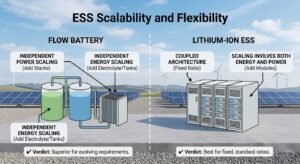
4.4 Scalability and Flexibility
Lithium-ion ESS scales in discrete modules. Increasing energy capacity requires adding more cells—which also affects power output and system management complexity. Power and energy are architecturally coupled.
Flow batteries scale power and energy independently. Need more power output? Add more cell stacks. Need longer duration? Add more electrolyte and expand the tanks. This decoupled architecture provides significant flexibility for developers designing systems with non-standard power-to-energy ratios, or who anticipate needing to expand capacity as loads grow over time.
✔ Verdict: Flow batteries offer superior architectural scalability, particularly for projects with evolving or uncertain future capacity requirements.
4.5 Round-Trip Efficiency
This is one area where lithium-ion retains a meaningful advantage. Modern lithium-ion ESS systems achieve round-trip efficiencies of 90–95%. Flow batteries—particularly VRFBs—typically achieve 65–82% round-trip efficiency, though newer cell stack designs and optimized pump systems are pushing toward 80–85%.
For applications where efficiency directly impacts project economics on a daily basis—such as high-frequency arbitrage or fast-response frequency regulation—this efficiency gap must be carefully modeled in the business case.
✔ Verdict: Lithium-ion maintains an efficiency advantage in current deployments, though the gap is narrowing with next-generation flow battery designs.
4.6 Upfront Capital Cost
At current market pricing, lithium-ion ESS systems remain less expensive on a per-kWh basis at installation, typically ranging from $200–$350/kWh at the system level. Flow battery systems—including VRFBs—currently cost approximately $400–$600/kWh installed, though costs are declining rapidly as manufacturing scales and electrolyte supply chains mature.
✔ Verdict: Lithium-ion has a lower upfront capital cost. However, this comparison changes significantly when total cost of ownership is modeled over the project’s full operational life.
5. Total Cost of Ownership: Where Flow Batteries Change the Equation
Procurement decisions based purely on upfront CapEx frequently lead to suboptimal financial outcomes in long-duration ESS. The definitive financial comparison requires modeling total cost of ownership (TCO) over the full project life—typically 20–25 years for utility and industrial assets.
When you factor in the following variables, the economics shift meaningfully:
- Capacity replacement cost: A VRFB rated for 20,000+ cycles requires no capacity replacement over 20 years at one cycle per day. A lithium-ion system will likely require a full or partial capacity replacement at year 8–15, adding significant unplanned CapEx and operational disruption.
- Electrolyte residual value: Vanadium electrolyte retains substantial commodity market value at project end-of-life. It can be sold, leased to another operator, or redeployed—a financial asset unique to flow battery systems.
- O&M profile: Flow batteries have fewer thermally stressed components and a simpler battery management system architecture compared to large lithium-ion arrays, potentially reducing long-term maintenance costs.
- Insurance and siting costs: Lower fire risk translates directly into lower insurance premiums and potentially lower civil infrastructure requirements (fire suppression systems, setback distances, blast walls).
Multiple independent engineering and financial analyses have concluded that for projects requiring 6+ hours of daily discharge sustained over 15–20 year periods, flow batteries achieve comparable or lower TCO compared to lithium-ion systems—despite carrying a higher initial capital cost. For large-scale utility and industrial customers amortizing assets over two decades, TCO is the number that drives the optimal procurement decision.
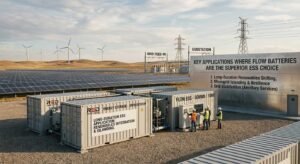
6. Key Applications Where Flow Batteries Are the Superior ESS Choice
6.1 Utility-Scale Renewable Energy Integration
Grid-connected solar and wind farms increasingly require 6–12 hour storage capacity to shift daytime generation into evening demand peaks. Flow batteries are purpose-built for this application profile, delivering the discharge duration, cycle endurance, and safety characteristics demanded by utility-class infrastructure and its investors.
6.2 Industrial Microgrids
Manufacturing facilities, data centers, and mining operations with significant power demands and low tolerance for grid outage risk are deploying integrated microgrids with embedded ESS. For industrial operators who cannot accept fire risk proximate to critical infrastructure, flow batteries offer a uniquely attractive combination of safety, longevity, and discharge flexibility—particularly for remote or high-consequence sites.
6.3 Remote and Off-Grid Power Systems
Remote communities, island grids, and off-grid industrial installations depend on ESS as their primary power infrastructure. In these contexts, the ability to operate for 20+ years without major capacity replacement—often in locations where logistics and service costs are prohibitive—makes flow batteries operationally and economically compelling.
6.4 Regulated Grid Services and Long-Duration Capacity Markets
As grid operators and regulators increasingly recognize the value of long-duration storage for capacity adequacy and grid stability, new market frameworks are emerging that create strong revenue streams for 6–12 hour assets. Flow batteries are well-positioned to capture these capacity payments, which are not available to shorter-duration lithium-ion systems in many markets.
7. Key Questions to Drive Your ESS Technology Decision
If you’re evaluating flow batteries versus lithium-ion for an upcoming project, the following questions should frame your technical and commercial analysis:
- What is your required discharge duration? If under 4 hours, lithium-ion likely wins on upfront economics. At 6+ hours, model both technologies on a full TCO basis before deciding.
- What is your project’s intended operational life? A 20+ year asset life fundamentally reshapes the TCO comparison—particularly when lithium-ion capacity replacement costs are modeled with appropriate cost escalation assumptions.
- What are your site’s safety and permitting requirements? Projects in densely developed areas, near occupied buildings, or in jurisdictions with stringent fire codes may find the permitting and insurance pathway substantially smoother for flow battery systems.
- What is your daily cycling frequency? Daily deep-cycling sustained over 20 years strongly favors flow batteries. Infrequent cycling profiles (seasonal storage, backup power) may not justify the flow battery premium.
- Is future capacity scalability a requirement? If your generation or load profile is expected to grow, flow batteries’ architecturally decoupled power-and-energy scaling provides valuable optionality that lithium-ion cannot match without replacing modules.
- What value do you ascribe to electrolyte residual value? Vanadium electrolyte is a tradeable commodity asset—a meaningful balance-sheet consideration for long-horizon investors that has no equivalent in lithium-ion ESS.
8. The Future of Flow Batteries in the Global ESS Market
The flow battery industry is accelerating rapidly. Leading global manufacturers are scaling VRFB and next-generation flow battery production, driving unit costs down on a trajectory similar to what lithium-ion experienced between 2012 and 2020. Government programs in the United States, European Union, China, Japan, and Australia are actively supporting long-duration energy storage development through grants, loan guarantees, and capacity market design reforms explicitly designed to capture the value of multi-hour storage.
Emerging chemistry—including iron-air batteries, organic redox flow systems, and semi-solid flow architectures—promise further cost reductions and performance improvements in the years ahead. The direction of travel is unambiguous: flow batteries are transitioning from a high-performance niche alternative to a mainstream ESS platform for long-duration applications at utility and industrial scale.
For project developers and buyers evaluating projects today with 2–3 year development timelines, it is prudent to model flow battery costs not at today’s price points but with reasonable cost reduction assumptions reflecting a rapidly maturing supply chain and technology base.
Conclusion: The Right Battery for the Right Project
Flow batteries are not universally superior to lithium-ion—and lithium-ion is not universally superior to flow batteries. Both technologies have a legitimate, growing, and increasingly well-defined role in the global ESS market. The optimal choice depends entirely on your project’s specific combination of discharge duration, cycle frequency, project life, safety requirements, and investment horizon.
What is clear is that the era of defaulting to lithium-ion for every ESS application is ending. As discharge duration grow, project timescales lengthen, safety demands intensify, and long-duration storage economics mature, flow batteries are increasingly the right answer for the right projects. The buyers and developers who understand this distinction today will be better positioned to build higher-performing, longer-lasting, and safer energy infrastructure for tomorrow.
Related Posts:
Why Does EV Battery Insulation Need UL94 V-0?
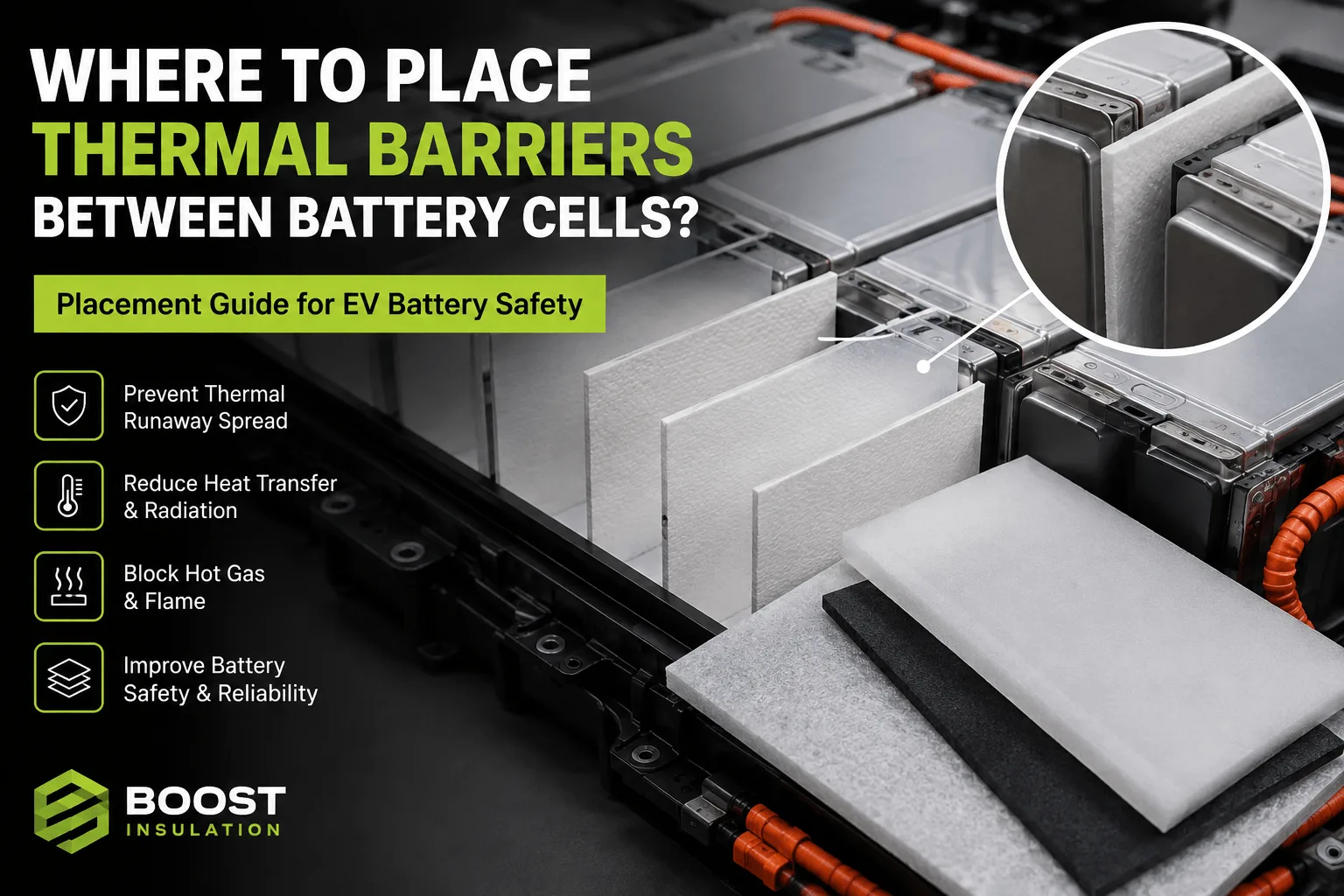
Where Should Thermal Barriers Be Placed Between Cells?
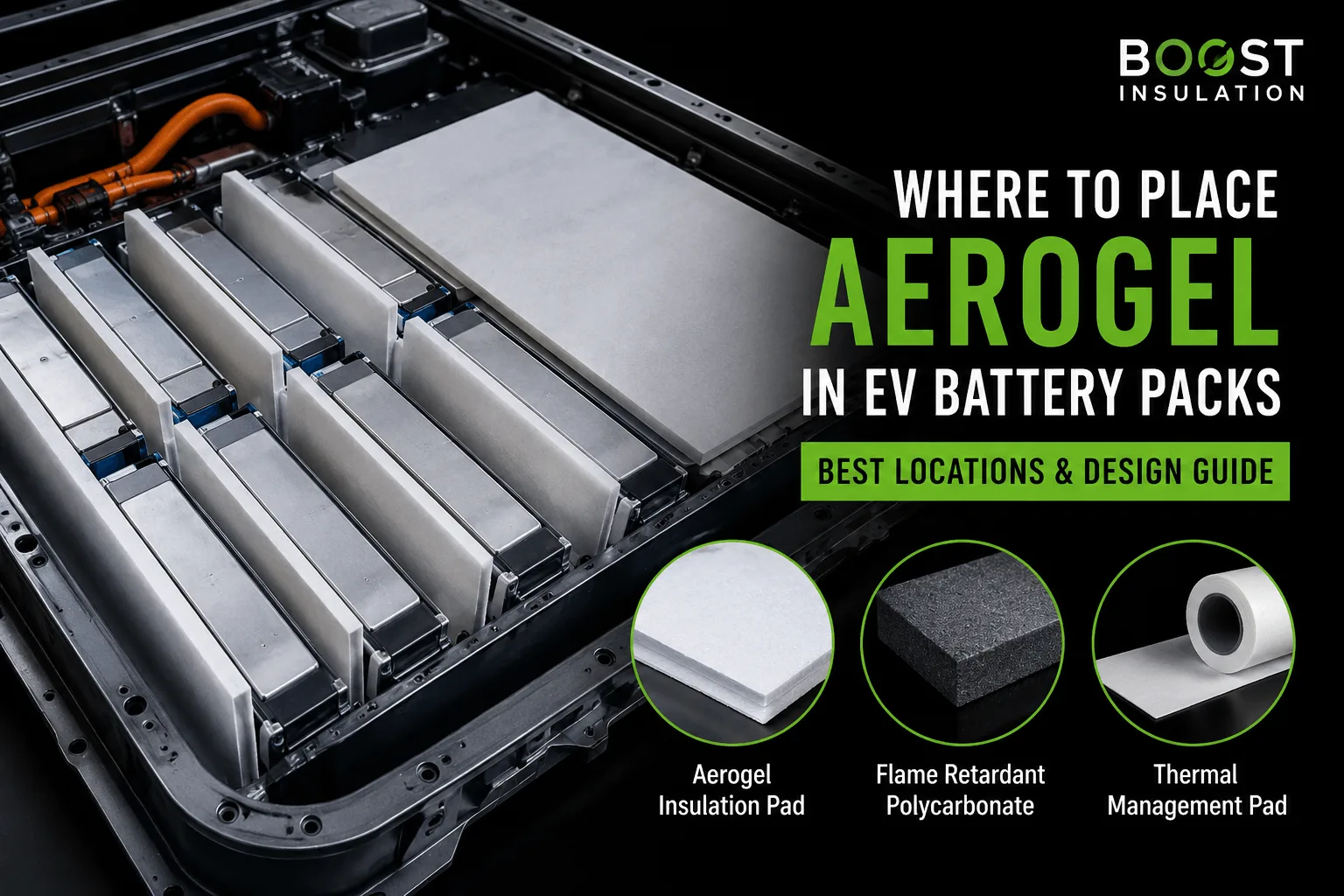
Where Is Aerogel Used Inside Modern EV Battery Packs?
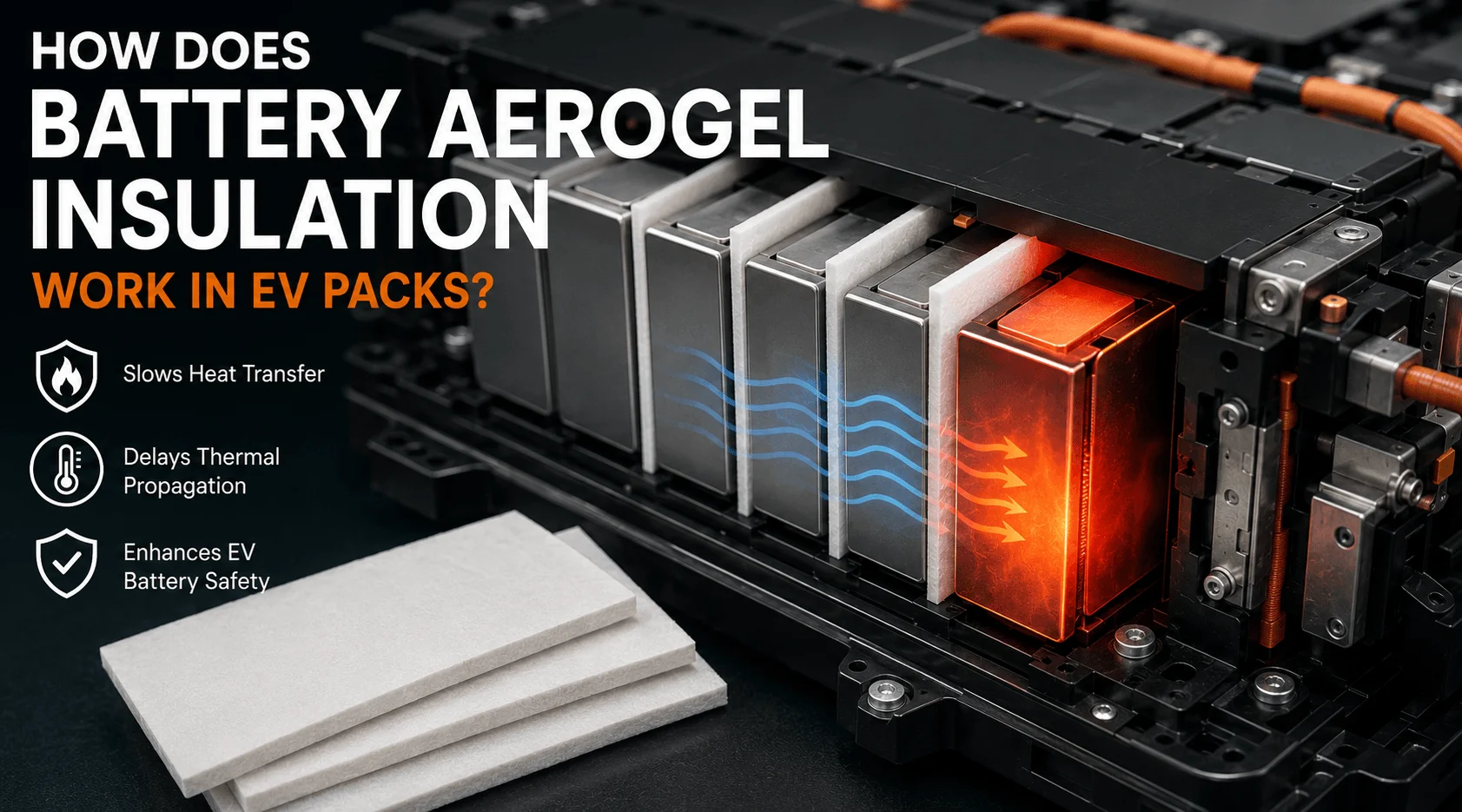
How Does Battery Aerogel Insulation Work in EV Packs?
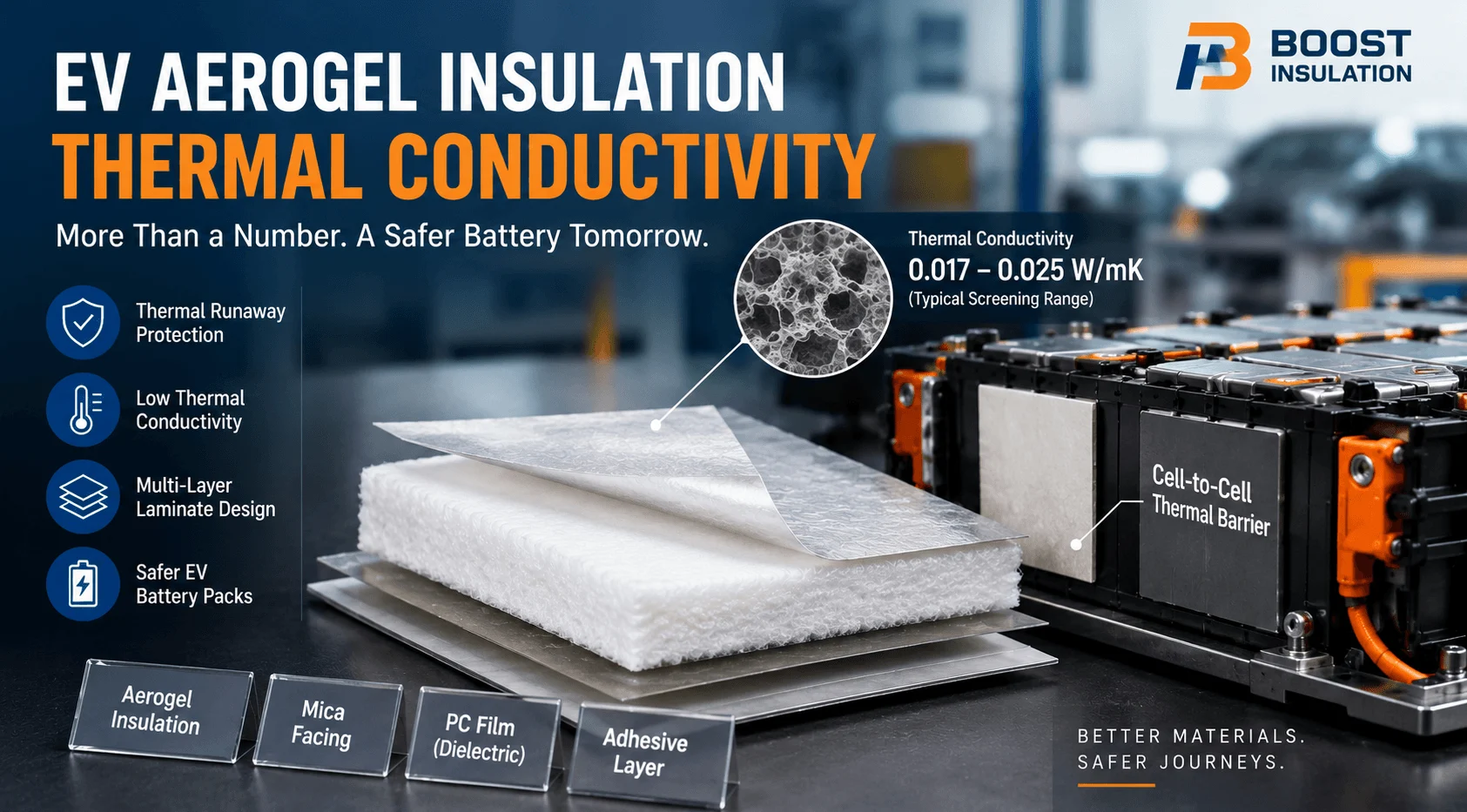
What Density Is Best for Battery Aerogel Insulation?
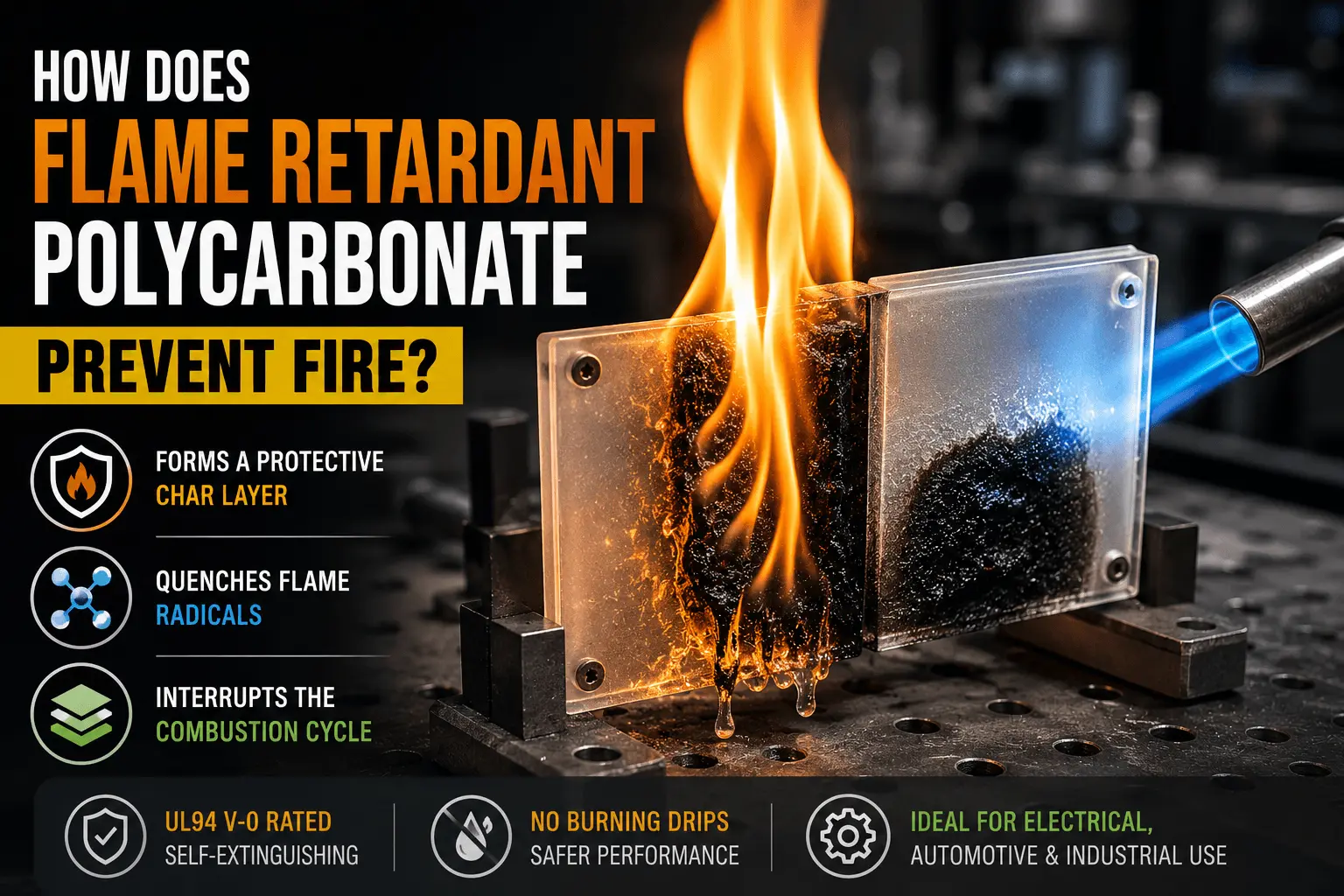
How Does Flame Retardant Polycarbonate Prevent Fire?
 betty wong