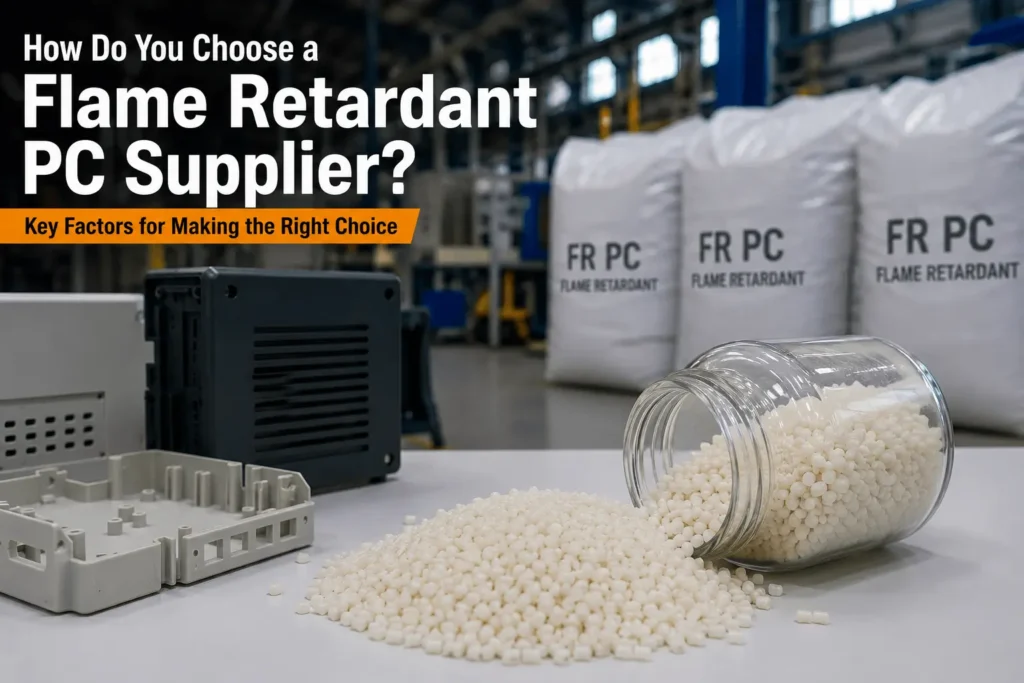
How Do You Choose a Flame Retardant PC Supplier?
Your product passes every mechanical test. The design is clean. The tolerances are perfect. But then one question stops your entire project in its tracks: Is your material truly flame retardant — and does your supplier actually know what that means?
Choosing the wrong flame retardant poly carbonate (PC) supplier is not just a procurement mistake — it can mean failed UL certifications, costly rework, delayed launches, and in the worst case, products that endanger end users. The stakes are real. And in a market flooded with vague datasheets, unverified certifications, and suppliers who treat “flame retardant” as a marketing checkbox, knowing how to separate the professionals from the pretenders is more important than ever.
This guide gives you a clear, practical framework for evaluating and selecting a flame retardant PC supplier — one that can actually deliver the quality, compliance, and consistency your application demands.
⚑ QUICK ANSWER
When evaluating suppliers, the checklist above is your starting point. But each factor deserves a deeper look — because the difference between a supplier who is certified and one who is genuinely capable is often invisible until something goes wrong on your production line.
1. Understand What Flame Retardant PC Actually Means
Poly carbonate (PC) is naturally a moderate fire-resistant thermoplastic, but standard grades do not meet the strict flammability standards required for electronics, electrical enclosures, automotive interiors, or medical housings. Flame retardant PC incorporates additives — often halogenated or halogen-free compounds — that interrupt combustion and achieve recognized flammability ratings.
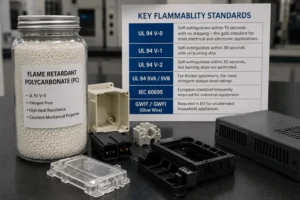
Key Flammability Standards to Know
- UL 94 V-0: Self-extinguishes within 10 seconds with no dripping — the gold standard for most electrical and electronic applications.
- UL 94 V-1: Self-extinguishes within 30 seconds with no burning drip.
- UL 94 V-2: Self-extinguishes within 30 seconds, but burning drips are permitted.
- UL 94 5VA / 5VB: For thicker specimens; the most stringent plaque-level ratings.
- IEC 60695: European standard frequently required for industrial equipment.
- GWIT / GWFI (Glow Wire): Required in EU for unattended household appliances.
A credible flame retardant PC supplier knows these standards inside out and can help you select the correct grade for your specific regulatory environment — not just hand you a generic datasheet with a “V-0” stamp on it.
2. Verify Certifications — and the Evidence Behind Them
Certifications are table stakes. But in the flame retardant materials market, certifications are sometimes overstated, outdated, or tied to a specific formulation that doesn’t match what you’re actually buying. Verification is everything.
What to Ask for — Not Just What to Accept
- UL Yellow Card (for UL-listed materials): Can be verified directly on UL’s Prospector or iQ database.
- Lot-specific COA (Certificate of Analysis): Should include fire performance test results, not just mechanical properties.
- Third-party laboratory test reports: Intertek, SGS, Bureau Veritas — not just the manufacturer’s internal reports.
- REACH & RoHS compliance declarations: Especially important if your products sell into the EU or contain halogenated FR additives.
- MSDS / SDS sheets: Confirm what flame retardant chemistry is used — halogenated or halogen-free.
Pro tip: Request the UL file number for any UL-rated material and cross-check it yourself. A supplier who discourages this — or who provides only a scan of a certificate without a verifiable file number — should trigger immediate concern.
3. Match the Grade to Your Application
Not all flame retardant PC is the same. The right grade depends on your processing method, wall thickness, color requirements, and end-use environment. Suppliers who offer only one or two FR PC grades are often not equipped to serve complex applications.
|
Application |
Recommended Grade |
UL Rating |
Key Feature |
|
Electrical connectors |
FR PC thin-wall |
V-0 @ 0.4mm |
High flow |
|
IT enclosures |
FR PC+ABS alloy |
V-0 @ 1.5mm |
Impact + FR balance |
|
LED lighting housings |
Halogen-free FR PC |
V-0 @ 1.0mm |
Color stability |
|
Automotive interior |
V-0 @ 2.0mm |
HDT > 120°C |
|
|
Medical devices |
Food-grade FR PC |
V-0 @ 1.5mm |
Biocompatibility |
A knowledgeable supplier will help you navigate these options rather than pushing you toward whatever they have in stock. Application engineering support — not just material sales — is a key differentiator of top-tier FR PC suppliers.
4. Evaluate Quality Consistency — Not Just a Single Sample
A sample that passes your incoming inspection is not enough. What matters is whether every batch, every shipment, every lot will deliver the same performance. Lot-to-lot consistency is one of the most overlooked — and most critical — factors when choosing a flame retardant PC supplier.
How to Test for Consistency
- Request data from at least three separate production lots before committing to a supplier.
- Ask about their SPC (Statistical Process Control) programs and incoming raw material testing protocols.
- Inquire about their resin source: Do they compound in-house or buy from a master-batch manufacturer? Who is their base PC resin supplier?
- For high-volume projects, consider a supplier audit or factory visit — or request a third-party audit report.
Inconsistent flame retardant levels don’t just cause compliance failures — they can create mold fouling, surface defects, and part warpage that cost you far more in production losses than any material savings are worth.
5. Assess MOQ, Lead Times, and Supply Chain Reliability
Even the highest-quality flame retardant PC supplier is useless to your business if they can’t align with your operational needs. Supply chain reliability has become a defining competitive advantage — especially after global disruptions exposed how fragile single-source dependencies can be.
Questions That Reveal Supply Chain Maturity
- What is the minimum order quantity (MOQ), and do they offer flexibility for development or prototype phases?
- What are standard lead times for both stock and custom-compounded grades?
- Do they maintain safety stock or buffer inventory for key customers?
- Where are their production facilities and raw material sources located?
- Have they experienced material shortages in the past two years, and how did they respond?
The best suppliers will offer transparency about their supply chain structure, not vague assurances. Ask for a formal capacity plan or supply agreement if your volumes justify it. A supplier who is serious about partnership will welcome the conversation.
6. Look for Genuine Technical Support
Flame retardant PC is a technically complex material. Its processing window can be narrower than standard PC, it may require careful drying protocols, and its interaction with colorants and other additives demands expertise. Suppliers who only sell material — and disappear when problems arise — leave you carrying all the technical risk.
Signs of a Supplier with Real Technical Depth
- They proactively share processing guidelines and recommended injection molding parameters.
- They have application engineers or technical sales teams — not just account managers.
- They can assist with material selection if your application requirements change.
- They provide regulatory filing support (e.g., helping you maintain your own UL listing when you use their material).
- They respond quickly and substantively to technical questions — not with a generic product page link.
Think of technical support not as an add-on but as an integral part of the product you are buying. Material that comes with genuine expertise behind it is almost always worth more than the cheapest option on the market.
7. Understand Pricing — and What It Actually Includes
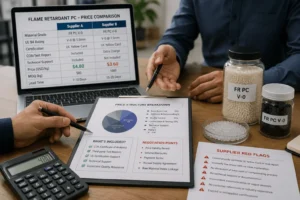
Price is important. But with flame retardant PC, cheap pricing almost always reflects a trade-off somewhere — lower-quality base resin, inconsistent compounding, minimal QC, or unverified certifications. The real cost of a poor-quality material is not the purchase price per kilogram; it is the rework, rejection, and requalification costs that follow.
How to Compare Prices Fairly
- Compare prices only when material grades, certifications, and specifications are equivalent.
- Ask whether the price includes COA, test reports, and technical support — or if these are charged separately.
- Request a price validity period and understand what triggers price adjustments (raw material index, volume, etc.).
- For larger volumes, negotiate a blanket order or annual supply agreement to lock in pricing and prioritize your supply.
A supplier willing to discuss pricing structure openly — including their margin structure and volume discount logic — is typically more trustworthy than one who gives you a number with no supporting context.
Red Flags: When to Walk Away from a Flame Retardant PC Supplier
After years of working with buyers across electronics, automotive, and industrial sectors, certain warning signs consistently predict a troubled supplier relationship. Do not ignore them.
- Cannot provide a verifiable UL Yellow Card or third-party test report.
- Offers unusually low prices with no clear explanation of how they achieve them.
- Reluctant or unable to disclose their base resin source or compounding process.
- Has no application engineering capability or technical documentation.
- Inconsistent communication — slow to respond, vague with answers, or changes specifications without notice.
- Cannot provide references from customers in your industry or application type.
- Certifications are expired, misapplied, or tied to a different product variant than what you’re ordering.
Trust your instincts. If a supplier makes you work hard to get basic information that any professional operation should readily provide, that friction will only increase once you’re in production and dependent on their supply.
10 Questions to Ask Before You Commit to a Supplier
Use this list as your due diligence checklist during supplier evaluation:
- What UL94 ratings does your material achieve, and at what specimen thicknesses?
- Can you provide a current UL Yellow Card and third-party laboratory test reports?
- What base PC resin do you use, and who is your raw material supplier?
- Can you share lot-to-lot consistency data from recent production runs?
- Is your FR chemistry halogenated or halogen-free, and do you have REACH/RoHS declarations?
- What are your standard MOQs, and can you support smaller quantities during the qualification phase?
- What are your standard and expedited lead times for both stocked and custom grades?
- Do you have application engineers available for processing and design support?
- Can you provide references from companies in our industry who use your FR PC?
- What does your quality control process look like, from incoming raw material to outgoing shipment?
The Bottom Line: Choose a Partner, Not Just a Vendor
Selecting a flame retardant PC supplier is not a one-time transaction — it is the beginning of a supply chain relationship that directly influences the safety, compliance, and marketability of everything you manufacture. The best suppliers don’t just fill purchase orders; they understand your application, anticipate your regulatory needs, support your team through qualification, and stand behind their material when questions arise.
The framework in this guide — certifications, grade selection, quality consistency, supply chain reliability, technical support, and transparent pricing — gives you a structured way to evaluate any FR PC supplier objectively. Use it before you commit to a new source, before you switch suppliers, and as a benchmark for your current partners.
Because when a product is in the hands of an end user and a fire starts, there is no such thing as “close enough” on flame retardance.
Ready to Find a Flame Retardant PC Supplier You Can Trust?
We supply certified UL94 V-0 flame retardant polycarbonate compounds — halogenated and halogen-free — with full documentation, application engineering support, and consistent quality backed by rigorous QC. Whether you’re in electronics, automotive, lighting, or industrial equipment, we have the grades and the expertise to support your project from development through mass production.
Related Posts:
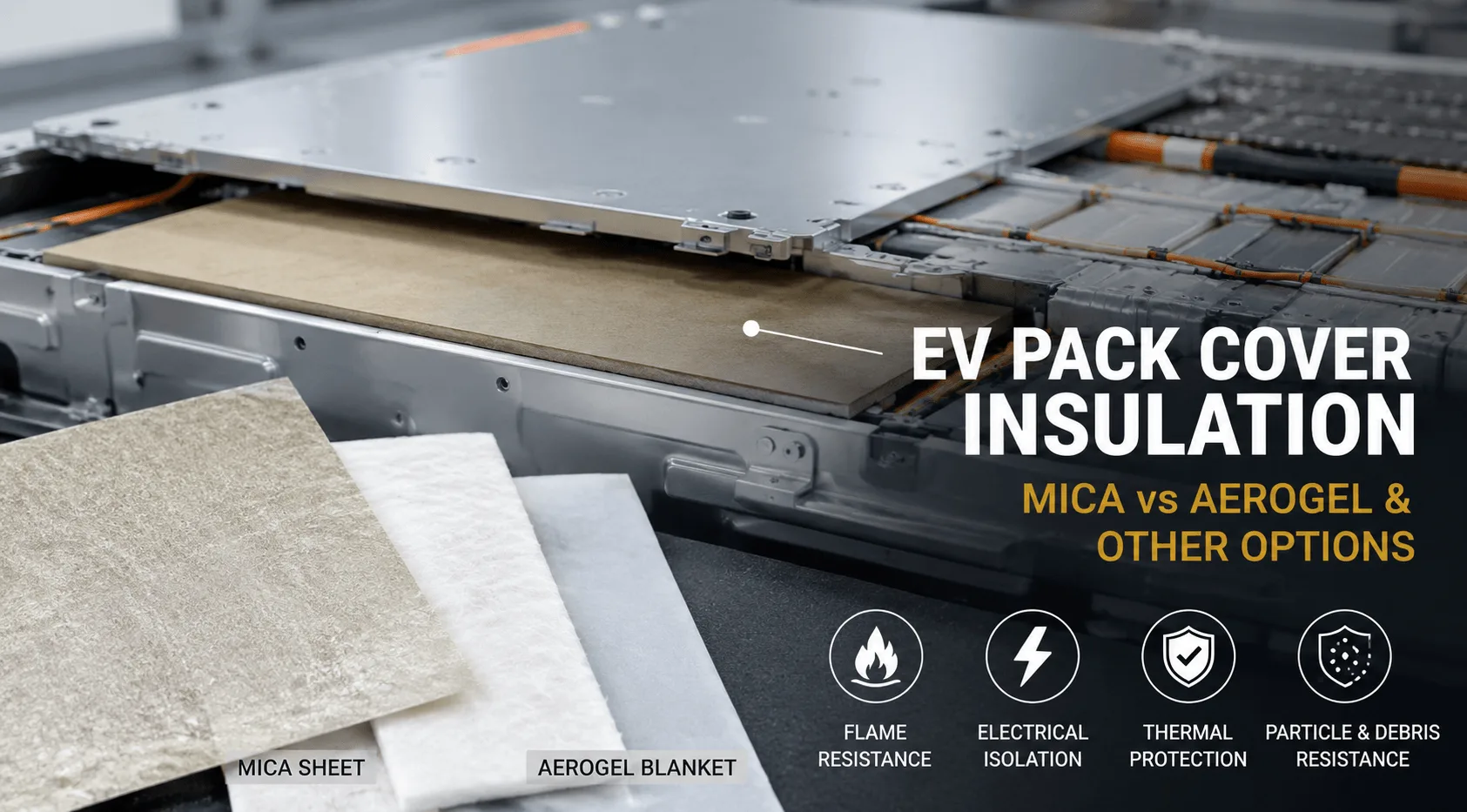
Which Insulation Material Is Best Under EV Pack Covers?
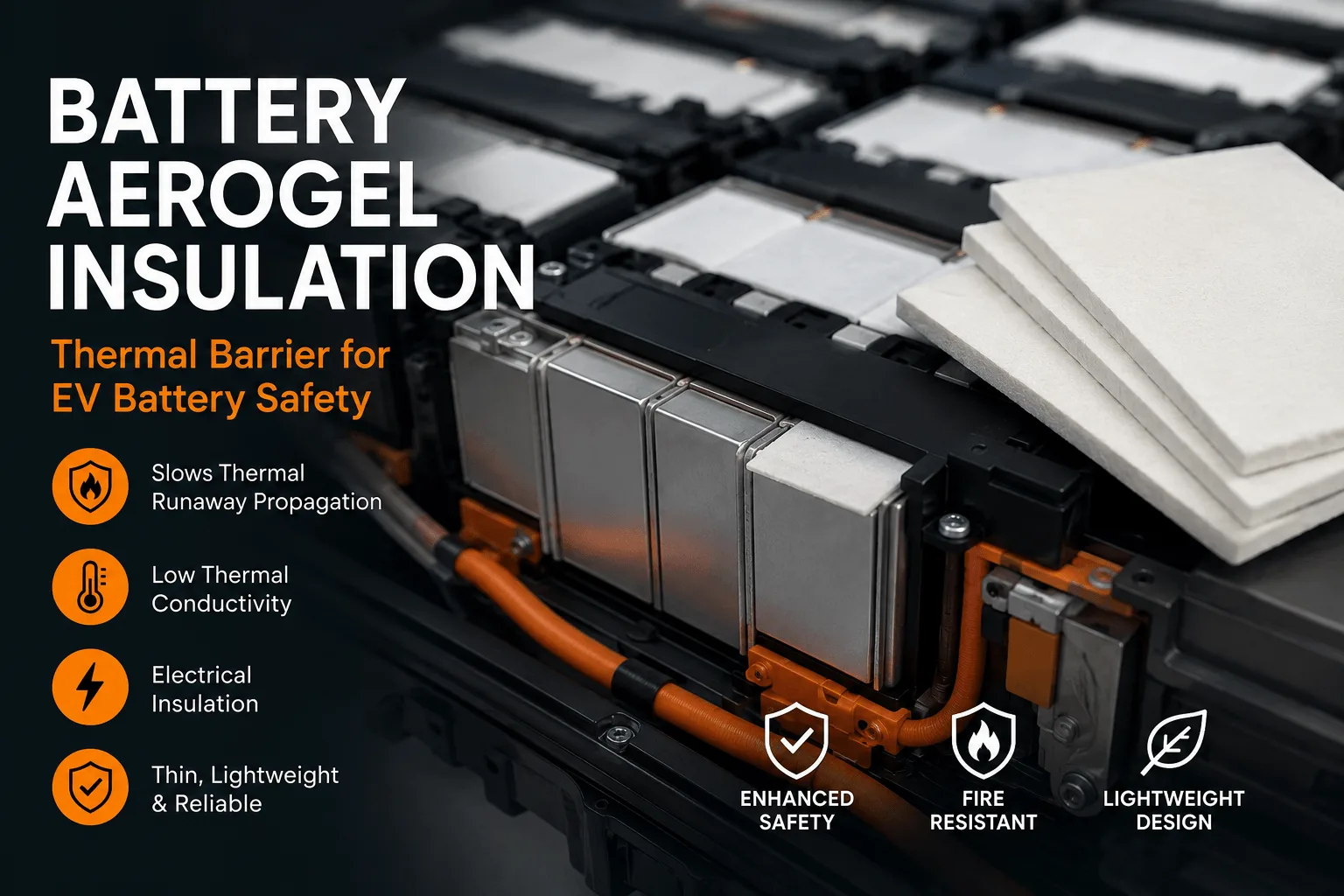
What Is Battery Aerogel Insulation for EV Battery Packs?
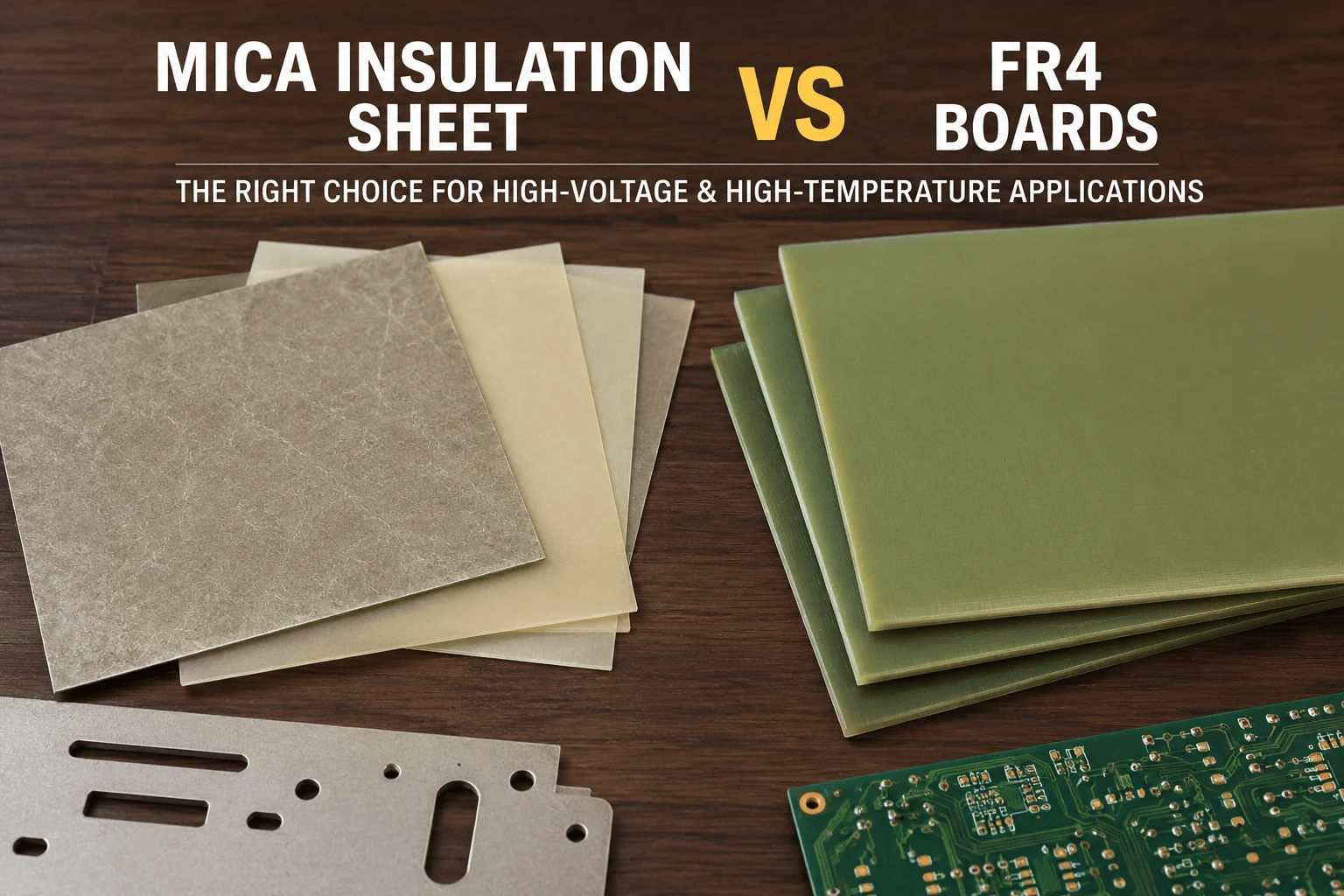
How Does a Mica Insulation Sheet Compare With FR4 Boards?
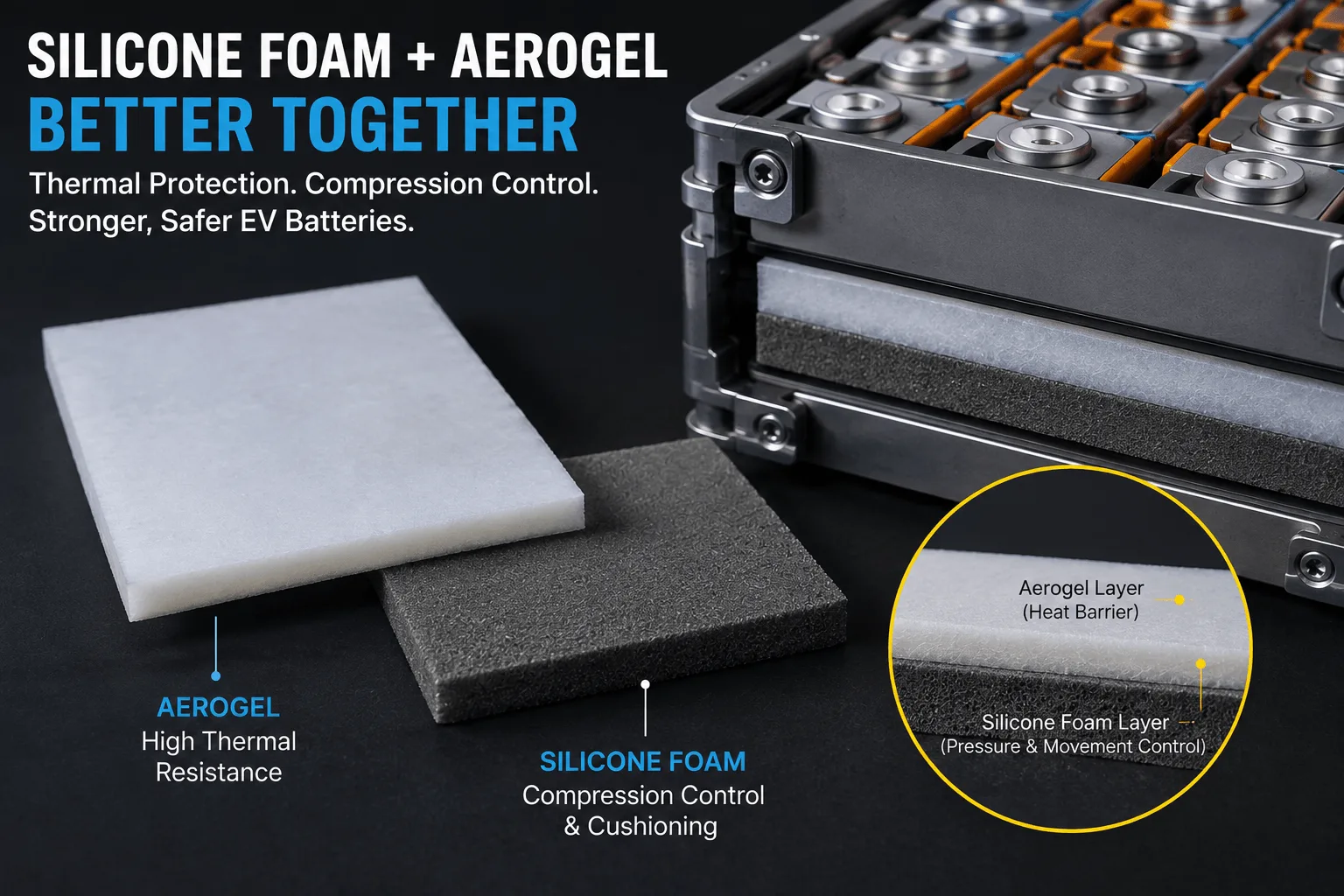
How Does Silicone Foam Work With Aerogel Barriers?
How Do You Choose Battery Aerogel Insulation for EVs?
What Insulation Does an Energy Storage System Need?
 betty wong