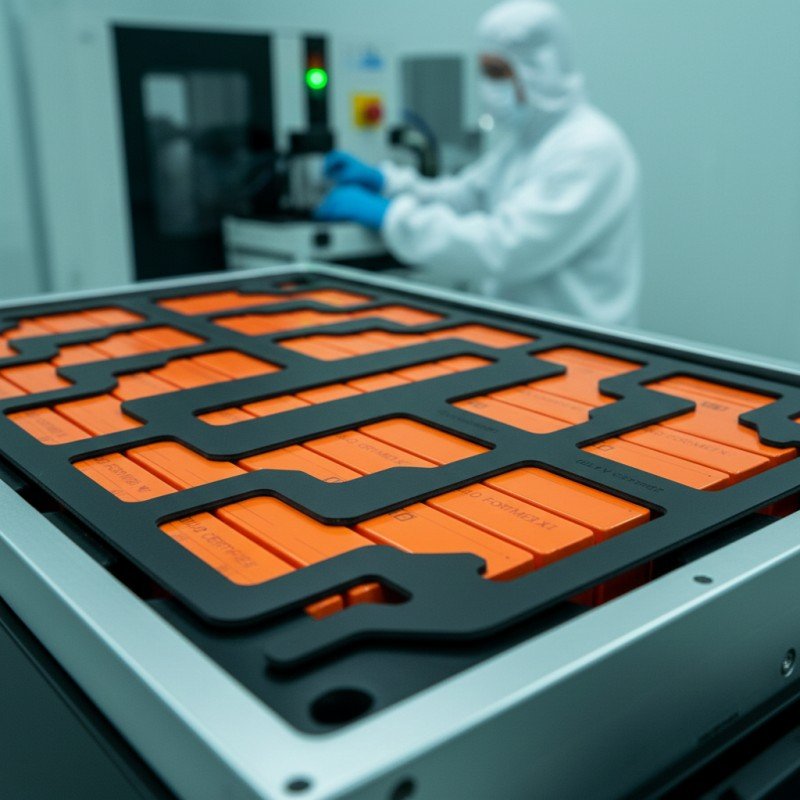

When Should EV Battery Packs Use Mica Instead of Aerogel?
Table of Contents
If your EV battery pack already has an aerogel barrier, does adding mica simply duplicate the same function—or can it solve a failure mode aerogel was never meant to handle? That question matters when a design must survive not only heat conduction between cells, but also flame, hot-gas jets, ejecta, high voltage, tight assembly tolerances, and years of vibration. The material decision should start with the failure path, not with a single thermal-conductivity number.
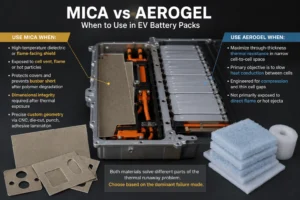
EV battery packs should use mica instead of aerogel when the main requirement is high-temperature structural integrity, flame and hot-particle resistance, or durable electrical isolation rather than maximum thermal resistance per millimeter. Mica is often the stronger choice for pack lids, vent corridors, module partitions, busbar and high-voltage zones, and other flame-facing barriers. Aerogel is usually preferred for thin cell-to-cell gaps where slowing conductive heat transfer is the priority. In many high-energy packs, the best solution is a mica-aerogel composite: mica faces the severe thermal event while aerogel limits heat transfer to adjacent cells or structures.
Mica vs Aerogel for EV Battery Packs: The Short Decision
| Design Question | Choose Mica When… | Choose Aerogel When… | Consider a Hybrid When… |
| Dominant heat path | Direct flame, vent jet, hot particles, radiant exposure | Cell-to-cell conduction through a narrow gap | Both direct flame and conductive heat matter |
| Electrical role | High-voltage dielectric barrier is a primary function | Electrical insulation is secondary or provided elsewhere | One part must provide both thermal and electrical protection |
| Mechanical role | Rigid/semi-rigid shield, cover liner, partition, busbar barrier | Thin compliant intercell barrier; engineered grades may manage compression | Mica facing plus aerogel/foam for thermal resistance and compliance |
| Geometry | Large flat covers, shaped shields, wraps, local flame zones | Broad thin cell faces with very limited space | Complex pack regions with multiple failure paths |
| Main optimization | Integrity during abuse conditions | Maximum thermal resistance at low thickness | System-level propagation delay and robust assembly |
Why This Is Not a Simple “Mica vs Aerogel” Material Contest
Battery thermal-runaway protection is a system problem. A failing lithium-ion cell can transfer energy through several parallel paths: direct conduction through neighboring cell faces, conduction through tabs and busbars, radiation, flame, hot gases, molten or solid ejecta, cooling plates, structural members, and the pack enclosure. A material that performs extremely well against one path may be mediocre against another.
Aerogel has become important in EV battery design because its highly porous structure can deliver very high thermal resistance in a thin section. Automotive aerogel barriers are engineered specifically for cell-to-cell applications and may also be tuned for compression response. That makes aerogel attractive where the design challenge is: “How do we keep a neighboring cell below its runaway threshold for as long as possible with only a small gap available?”
Mica solves a different problem. Mica-based sheets and tapes are valued for dielectric insulation, resistance to elevated temperatures, and the ability to remain a physical barrier when many polymeric materials have softened, melted, or carbonized. A well-designed mica component can therefore be more useful when the design challenge is: “What material stays in place when a vent jet, flame, hot particles, or a high-voltage fault reaches this surface?”
For procurement teams, this distinction is important because comparing only datasheet thermal conductivity can lead to the wrong RFQ. The relevant unit of comparison is the finished converted component in the actual pack location: thickness, areal mass, binder, reinforcement, adhesive, compression, support, cutouts, edge condition, and the complete heat path all influence the result.
When Should EV Battery Packs Use Mica Instead of Aerogel?
Mica should move to the top of the candidate list when the component must function as a high-temperature dielectric or flame-facing shield. This is especially true when the barrier is exposed to an energetic cell vent, when it protects an aluminum or steel cover from direct flame, or when it must prevent an energized busbar from contacting surrounding metal after nearby polymer insulation has degraded.
The decision becomes even stronger when dimensional integrity matters after thermal exposure. A pack-lid liner, module partition, service-disconnect shield, fuse-area insulator, or busbar barrier must often remain located and continuous even after the local environment has become far hotter than normal operating conditions. In those positions, very low thermal conductivity is useful but not sufficient; the barrier must also resist erosion, tearing, shrinkage, cracking, or loss of electrical isolation.
Mica can also be attractive where a converter must create a precise custom geometry. Rigid and flexible mica constructions can be CNC cut, die-cut, punched, laminated with pressure-sensitive adhesive, combined with films or foams, and shaped into local shields. The exact process depends on the grade because mica composites can be brittle at narrow webs and edges. Good DFM therefore matters as much as the raw material choice.
Aerogel remains the better starting point when the most important requirement is to maximize through-thickness thermal resistance in a narrow cell-to-cell space. Automotive aerogel barriers are specifically marketed for pouch and prismatic cells and can be engineered to combine thermal-barrier and compression functions. Replacing that function with a thin mica sheet simply because mica tolerates high temperature can reduce propagation delay if the dominant heat path is conduction across the cell face.
1. Use Mica for Pack Lids and Flame-Facing Enclosure Surfaces
The underside of a battery-pack lid is one of the clearest examples of a location where mica can be more appropriate than aerogel. During a severe event, cells may vent upward. The lid can be exposed to high-temperature gas, flame, particles, and localized jet impingement. The design objective is not only to slow heat flow; it is to protect the enclosure and anything on the passenger side of that enclosure from direct thermal attack.
A mica sheet or mica-based composite can provide a durable fire-facing surface across a relatively large area. It can also add electrical isolation between the cell/module region and a conductive metal lid. Adhesive-backed constructions can simplify assembly, while mechanical retention or local reinforcement may be added in high-severity zones.
Aerogel can still add value behind a mica facing. If the allowable cold-side temperature of the lid is difficult to meet, an aerogel layer can reduce through-thickness heat transfer while the mica protects the aerogel from direct flame and particles. This layered strategy is often more technically defensible than asking one material to provide every function.
Engineering checkpoint: do not qualify an under-lid barrier only with a small flame test. The final evaluation should consider vent direction, jet location, unsupported holes, fasteners, seams, adhesive behavior, edge leakage, and the actual lid material. A barrier can perform well at the center of a coupon and fail around an opening.
2. Use Mica Around Busbars, HV Junctions, Contactors, and Fuse Areas
High-voltage components create a second strong case for mica. In busbar and junction areas, the primary requirement may be electrical isolation first and thermal insulation second. The part must maintain dielectric separation between conductors and grounded structures during normal life, and ideally continue to provide separation during an abnormal thermal event.
Mica has a long history as an electrical insulation material because it can combine dielectric properties with high-temperature capability. In an EV pack, this makes it useful for busbar covers, local shields, terminal barriers, fuse-zone insulation, contactor compartments, and metal edges near energized parts. Thin mica tape can wrap irregular geometries; rigid or semi-rigid mica can create a defined isolation wall.
Aerogel is not automatically wrong in these locations, but it is usually selected for its thermal rather than electrical role. If the design already has a qualified dielectric film or molded barrier and only needs additional thermal resistance, aerogel may be useful. If the same part must also provide durable electrical separation after severe heating, mica deserves stronger consideration.
Engineering checkpoint: specify the finished part, not just a generic dielectric-strength value. Holes, edge cracks, adhesive squeeze-out, conductive dust, burrs, and minimum wall distances can determine real-world withstand performance. Validation should include the converted geometry after environmental aging.
3. Use Mica Where Vent Jets and Hot Ejecta Can Erode a Soft Barrier
Thermal runaway is not a uniform oven exposure. A cell vent can create a concentrated stream of hot gases and particles. That jet can attack a small area with far more severity than a broad, steady heat flux. A material with excellent thermal resistance may still fail if its surface is physically eroded, punctured, or displaced.
Mica’s value in such areas is its ability to serve as a sacrificial or persistent facing layer. It can shield a module wall, cross-member, lid, cable path, sensor, or neighboring cell from direct impingement. Flexible mica tapes can also close local weak points around corners, slots, or holes where a large panel cannot maintain continuous coverage.
This is one reason engineers increasingly design thermal barriers by failure mechanism rather than by nominal material category. An aerogel layer can be excellent against conductive heat but may need encapsulation or a more robust facing in locations exposed to abrasion, dust concerns, high-velocity gas, or debris. Conversely, mica alone may survive the jet yet pass too much heat through to the protected side if the available thickness is small. A composite can address both limitations.
Engineering checkpoint: define whether the barrier is expected to withstand direct vent impingement, indirect flame, radiant heat, or only neighboring-cell conduction. The test fixture should reproduce the relevant mode as closely as practical.
4. Use Aerogel First for Thin Cell-to-Cell Thermal Isolation
The strongest case for aerogel is the narrow interface between adjacent pouch or prismatic cells when the pack designer needs maximum thermal resistance with minimum added thickness. The more heat that can be delayed at this interface, the more time the cooling system, vent strategy, sensing logic, and neighboring cell mass have before a second cell reaches critical temperature.
Commercial automotive aerogel cell barriers are designed around this use case. They can be tuned for thickness and compression behavior, and some products are intended to accommodate the daily breathing and progressive swelling of lithium-ion cells. That multifunctional behavior can be difficult to reproduce with a rigid mica sheet alone.
Mica can still be used between cells when flame resistance and dielectric separation are especially important, but the engineering team should quantify the thermal penalty. If a design replaces an aerogel barrier with a mica barrier of equal thickness, it should not assume equivalent propagation performance. The correct comparison is based on cold-side temperature, time to neighboring-cell critical temperature, compression state, and module-level propagation results.
Practical rule: when the cell face is broad, the gap is thin, and the heat path is primarily conduction, start with aerogel or another ultra-low-conductivity barrier. Add mica only if the abuse mode, dielectric requirement, or surface-durability requirement justifies it.
5. Use Mica When the Barrier Must Keep Its Shape at High Temperature
Some battery-pack insulation parts are not merely fillers; they are geometrically defined barriers. A module partition may need to maintain a protected corridor. A lid shield may need to remain across a seam. A busbar separator may need to keep two conductors apart. In these locations, post-exposure shape and continuity can be more important than room-temperature softness.
Rigid or reinforced mica sheets can provide this defined geometry. They are particularly useful where the part is supported by a frame or bonded to a cover and does not need to accommodate large cell swelling. The converter can add adhesive patterns, reinforcement, protective films, or local forming features to improve assembly.
However, “rigid” does not mean indestructible. Mica laminates can crack at sharp corners, thin bridges, unsupported holes, and highly stressed bend lines. DFM should therefore consider minimum web width, internal radii, punch direction, edge support, liner removal, packaging orientation, and operator handling.
Aerogel is often more compliant, but that compliance can be an advantage in a cell stack rather than a disadvantage. The correct choice depends on whether the component must maintain a defined shape or conform to a changing gap.
6. Use Mica When Electrical Insulation Must Survive the Thermal Event
A useful way to frame the selection is to ask what happens after the first polymer layer fails. Polyimide, polyester, polycarbonate, foam, and pressure-sensitive adhesives can provide excellent normal-service functions, but severe thermal runaway can push local temperatures far beyond normal operating conditions. If the design still requires a non-conductive barrier after those layers have softened or decomposed, mica can become a critical secondary defense.
This matters near high-voltage busbars, terminal blocks, service disconnects, pack walls, and conductive covers. During an event, mechanical distortion can move conductors, melt clips, or expose metal. A mica barrier can help preserve an electrical boundary while also providing a fire-resistant layer.
Do not overstate this advantage. The mica mineral may remain stable while the binder, adhesive, film, or reinforcement changes. That is why the exact laminate construction and minimum finished thickness need to be frozen in the drawing and control plan. Testing should include the aged and converted part, not just the raw mica sheet.
For OEM and Tier 1 buyers, this is a useful supplier-qualification question: can the converter provide traceability for the mica substrate, binder, reinforcement, adhesive, liner, and process lot? Material substitutions that appear minor can change dielectric and thermal performance.
7. Use Aerogel When Pack Energy Density Makes Every Millimeter Critical
EV battery architectures continue to push toward higher volumetric efficiency. Cell-to-pack and other highly integrated designs reduce intermediate structural layers and attempt to allocate more of the pack volume to active cell material. In that environment, thermal barriers must achieve more performance in less space.
Aerogel’s low thermal conductivity is attractive precisely because it can provide high thermal resistance with a small thickness penalty. For a broad intercell interface, this can help preserve the cell-to-pack ratio while still creating a meaningful propagation barrier.
Mica may be thinner in some local dielectric applications, but it should not be selected solely because a thin mica sheet physically fits. If the job is to hold down cold-side temperature across a large cell face, the relevant measure is effective thermal resistance under the installed compression and temperature profile.
Industry insight: the winning material is increasingly the one that removes a separate component. If an aerogel barrier can also provide a required compression response, or a mica composite can combine dielectric, flame, adhesive, and handling functions, the pack may gain more from component consolidation than from optimizing one raw-material property.
8. When a Mica-Aerogel Composite Is Better Than Either Material Alone
Many of the most demanding pack locations have two distinct thermal problems at the same time. The hot side may see flame, particles, or a vent jet, while the cold side has a strict temperature limit. A mica-aerogel composite can divide those functions between materials that are naturally suited to them.
A typical concept places mica toward the severe exposure. The mica serves as the flame-facing, erosion-resistant, electrically insulating surface. Aerogel behind it supplies the majority of the through-thickness thermal resistance. A compliant foam can be added if the assembly must manage tolerance or swelling. A protective film or pressure-sensitive adhesive may simplify installation.
This layered design is not automatically better. Interfaces introduce their own failure modes: delamination, adhesive decomposition, edge heat bridges, trapped gas, uneven compression, and tolerance stack-up. The laminate should be tested at the actual installed pressure and with the same edge treatment used in production.
For a die-cut supplier, this is where converting capability creates real value. The customer may not need four separate materials delivered to the line. A pre-laminated, kiss-cut, registered component with a controlled adhesive pattern, release liner, pull tab, and inspection criteria can reduce assembly time and variation.

How Mica and Aerogel Compare by Engineering Function
Thermal Conductivity and Thermal Resistance
Aerogel generally wins when the comparison is purely about minimizing heat transfer through a thin barrier. Its porous structure suppresses solid and gas conduction, which is why it is widely used as a thermal insulation platform. For an EV designer, the practical metric is not only the advertised room-temperature thermal conductivity; it is the effective thermal resistance of the installed part over the relevant temperature and compression range.
Mica should be treated differently. Its thermal value comes partly from slowing heat and partly from staying present as a barrier under severe exposure. When mica is used as a flame shield or dielectric separator, a somewhat higher heat flux can be acceptable if the protected structure remains intact and the pack-level propagation target is still met.
Fire, Flame, and Hot-Particle Protection
Mica is particularly compelling for direct flame and hot-particle protection. Commercial mica tapes for EV applications are promoted specifically for flame mitigation and high-temperature electrical insulation, including use on solid surfaces, corners, and vulnerable holes. This matches the real geometry of many pack weak points.
Aerogel products developed for EVs can also function as fire barriers, so it would be inaccurate to describe aerogel as unable to withstand thermal-runaway conditions. The distinction is that aerogel is often optimized around cell-to-cell thermal and mechanical performance, while mica is commonly chosen as a robust high-temperature electrical/fire-facing layer. Evaluate the exact product, not the generic material name.
Compression and Cell Swelling
Prismatic and pouch cells change thickness during charge, discharge, aging, and thermal cycling. The intercell stack therefore needs a controlled compression strategy. Some automotive aerogel barriers are engineered to contribute mechanical compression behavior as well as thermal protection. This can make them highly efficient components in the cell stack.
Mica by itself provides limited compliance. If mica is required at the intercell interface, it may need to be paired with silicone or polyurethane foam to manage swelling. Commercial EV composite portfolios already include foam-mica and encapsulated-aerogel concepts for this reason. The trend is toward multifunctional pads, not isolated sheets.
Electrical Insulation
Both material systems can be engineered into electrically insulating components, but mica has a particularly strong value proposition when high-temperature dielectric integrity is a primary requirement. The final dielectric design should define voltage, dwell time, leakage current, insulation resistance, creepage and clearance geometry, humidity conditioning, and post-aging acceptance criteria.
An aerogel barrier should not be assumed to provide the required dielectric function unless its finished construction has been qualified for that requirement. Encapsulation layers, scrims, coatings, adhesives, and edge treatments can become part of the electrical system.
Manufacturing and Handling
Mica and aerogel create different manufacturing risks. Mica laminates can crack, fray, delaminate, or generate dust if tool geometry and material support are poorly controlled. Aerogel composites may require encapsulation, careful slitting and cutting, dust control, compression control, or protective liners depending on construction.
The best converter should therefore be evaluated on the finished-part process: incoming material verification, lamination registration, die-cut edge quality, dimensional capability, cleanliness, liner design, packaging, lot traceability, and change control. A low-cost raw sheet that causes yield loss or assembly damage is not a low-cost solution.
Industry Insight: EV Thermal Barriers Are Becoming Location-Specific
A major shift in battery safety engineering is the move away from one “hero material” covering the entire pack. As pack architectures integrate more tightly, each region has a more specific job. The cell-to-cell interface may prioritize thermal resistance and compression. The top of the module may prioritize vent management and flame protection. The pack lid may prioritize burn-through resistance. Busbar areas prioritize dielectric protection. Perimeter structures may need both fire and mechanical isolation.
This location-specific approach explains why mica and aerogel are increasingly complementary rather than mutually exclusive. An OEM may use an aerogel cell barrier, mica under the lid, flame-retardant film around high-voltage components, silicone foam for compression, and thermal interface material on the cooling plate—all within the same pack.
Regulatory development also reinforces a system-level mindset. Vehicle and battery requirements focus on whether thermal propagation creates hazards and whether occupants receive sufficient warning, not on whether one coupon of insulation has a certain marketing label. For suppliers, that means customers are asking for more representative evidence: thermal curves, flame or jet exposure, installed-thickness behavior, dielectric aging, module testing, PPAP documentation, and stable production traceability.
For Chinese insulation and die-cut manufacturers, this is an opportunity to move from being a material reseller to being a component engineering partner. The value is not “we can cut mica.” The value is “we can help translate a heat path, electrical requirement, assembly constraint, and validation target into a controlled multi-layer component that can be manufactured at scale.”
A Practical Selection Matrix for EV Battery Engineers
| Application / Requirement | Mica | Aerogel | Hybrid | Why |
| Thin cell-to-cell conduction barrier | Possible | Strong choice | Strong choice | Aerogel maximizes thermal resistance; hybrid adds a flame/dielectric facing. |
| Pack-lid flame barrier | Strong choice | Possible | Strong choice | Mica provides a durable flame-facing surface; aerogel can lower cold-side temperature. |
| Vent corridor / jet shield | Strong choice | Product-dependent | Strong choice | Surface erosion and hot-particle resistance become important. |
| Busbar / HV isolation | Strong choice | Product-dependent | Possible | High-temperature dielectric integrity and precise geometry favor mica. |
| Compression + thermal barrier | Needs foam/compliant layer | Strong for engineered grades | Strong choice | Mechanical response is part of the cell-stack design. |
| Large rigid module partition | Strong choice | Possible | Possible | Mica provides defined geometry and electrical/fire functions. |
| Very tight volumetric constraint | Application-dependent | Strong choice | Application-dependent | Thermal resistance per millimeter may dominate. |
| Multiple severe failure paths | Incomplete alone | Incomplete alone | Strong choice | Layering can separate flame-facing and heat-blocking functions. |
What Test Data Should You Request Before Switching From Aerogel to Mica?
A material substitution should be treated as a design change, not a purchasing shortcut. Start by defining the current barrier’s function. Is it stopping conductive heat, managing compression, providing dielectric isolation, resisting flame, sealing a gap, or doing several of these at once? If the existing aerogel part has two functions and the proposed mica part has only one, the comparison is incomplete.
For thermal evaluation, request cold-side temperature versus time under a defined heat flux or flame exposure, thickness before and after compression, areal mass, temperature-dependent conductivity where available, shrinkage, and post-test integrity. For a cell-to-cell application, the most useful evidence ultimately comes from representative cell or module testing with the real spacing, SOC, busbars, cooling structure, compression, and vent direction.
For electrical evaluation, define dielectric strength, insulation resistance, conditioning, and the finished geometry. For mechanical evaluation, inspect edge quality, crack resistance, flatness, puncture behavior, compression, vibration, and handling. For production evaluation, confirm raw-material source, thickness tolerance, lot traceability, adhesive registration, liner release, packaging, inspection method, and formal change notification.
The switch is justified only when the complete part meets the pack’s acceptance criteria with acceptable manufacturing margin. A datasheet comparison is useful for screening but should not be used as the final validation.
How Cost Should Influence the Mica vs Aerogel Decision
Cost matters, but the useful number is total installed cost—not price per square meter. A less expensive sheet can become more expensive if it requires extra foam, a second dielectric film, mechanical fasteners, extra assembly labor, higher scrap, or a larger gap that reduces energy density. A premium barrier can be economical if it replaces two separate components or allows a thinner pack architecture.
Mica can be cost-effective in large flat flame barriers, local die-cut dielectric parts, and high-volume converted shapes because the material can be laminated and cut using established processes. Aerogel economics depend heavily on the exact automotive grade, encapsulation, thickness, compression function, and required area. Neither material should be labeled universally “cheaper.”
Procurement should ask engineering for a functional cost breakdown: material cost, converting yield, tooling, assembly time, mass, thickness, validation, warranty risk, and the number of functions consolidated. This avoids a common sourcing mistake—optimizing a component price while increasing pack-level cost or risk.

DFM: Designing Mica Parts for Reliable Die Cutting and Assembly
Mica parts require disciplined DFM because the material is layered and can be sensitive at sharp features. Drawings should identify minimum webs, internal corner radii, hole-to-edge distances, bend zones, adhesive keep-outs, liner splits, pull tabs, protected surfaces, and edge-quality acceptance criteria. If the component is large, flatness and packaging support may be critical to prevent damage before assembly.
Adhesive selection should reflect the substrate and the real environment. Room-temperature peel strength alone is not enough. The adhesive may see aluminum, steel, coated metal, plastic, humidity, vibration, electrolyte contamination, thermal cycling, and abnormal high temperature. Selective adhesive patterns can reduce polymer content in the hot zone while keeping the part positioned during assembly.
Prototype the converted laminate rather than only the raw sheet. Release-liner removal, operator handling, stack compression, screw installation, and local bending can reveal cracks or delamination that are invisible in flat-sheet data. The production-representative sample is the object that should enter validation.
DFM: Designing Aerogel Parts for Cell-to-Cell Use
Aerogel barriers also need application-specific converting controls. The design should define free-state and installed thickness, compression range, areal density, edge encapsulation, liner or carrier construction, dust-control requirements, and how the part is positioned during cell stacking. Small changes in compression can alter both mechanical response and thermal performance.
For pouch and prismatic packs, the designer should model cell swelling over life and specify the force-deflection window the stack must maintain. If an aerogel part is expected to act as both thermal barrier and compression pad, replacing it with mica requires a separate plan for the lost compliance function.
This is why a converter that can work with mica, aerogel, silicone foam, flame-retardant films, thermal pads, and adhesives has an advantage: the design review can focus on the system function instead of pushing one material regardless of location.
RFQ Checklist: Information to Send a Mica or Aerogel Converter
A technically complete RFQ produces faster and more accurate recommendations. Send the cell format and chemistry, module or pack layout, nominal and maximum system voltage, barrier location, vent direction, available thickness, target thermal performance, dielectric requirement, expected compression, substrate, assembly method, operating temperature, abnormal thermal exposure, environmental conditions, annual volume, prototype timing, PPAP level, and target production location.
Attach a 2D drawing or CAD file showing critical dimensions, tolerances, holes, slots, minimum webs, corner radii, adhesive areas, liner split, pull tabs, bend or forming zones, and packaging orientation. If the design is confidential, a simplified boundary drawing can still allow an initial DFM review.
Also state the current problem. For example: neighboring-cell temperature rises too fast; the lid fails a flame test; a busbar insulation film shrinks; the aerogel barrier is difficult to assemble; mica cracks during die cutting; the stack force is out of range; or the current solution is too thick. A supplier can recommend a better construction when the failure mode is explicit.
How Boost Insulation Can Support Mica, Aerogel, and Hybrid EV Barriers
Boost Insulation is positioned as a China-based EV battery insulation and precision die-cutting manufacturer. Its public capabilities include DFM support, in-house tooling, cleanroom lamination and die cutting, rapid prototyping, APQP and PPAP support, and lot-to-lot traceability. The company works with EV dielectric insulation, aerogel, mica, flame-retardant polycarbonate, silicone sheets, thermal pads, and adhesive materials.
For an EV thermal-barrier project, that breadth matters because the best answer may not be a single-material replacement. A customer can ask for a mica shield, an aerogel cell barrier, a mica-foam pad, a mica-aerogel laminate, or a multi-layer die-cut component with adhesive and liner designed for assembly. DFM can then address tolerance, cut quality, edge support, lamination sequence, tooling, inspection, and packaging before the design is frozen.
If you are comparing mica with aerogel for a new battery pack or troubleshooting a current barrier, send Boost Insulation your drawing together with the barrier location, cell format, voltage, available thickness, thermal exposure, compression requirement, adhesive preference, validation method, prototype quantity, annual volume, and PPAP expectations. A useful quotation should recommend the construction and explain why it fits the failure path—not simply quote the material you named.
Frequently Asked Questions
Is mica better than aerogel for EV battery thermal runaway protection?
Not universally. Mica is often better for direct flame, hot-particle exposure, high-temperature structural integrity, and electrical insulation. Aerogel is often better when the key goal is maximum thermal resistance in a thin cell-to-cell gap. Severe applications may benefit from a composite using both.
Can mica replace aerogel between battery cells?
It can in some designs, but the replacement should be validated. A mica sheet may provide excellent flame and dielectric protection but less thermal resistance at the same thickness than an automotive aerogel barrier. If the current aerogel also manages cell compression, the replacement must address that mechanical function.
Where is mica most useful inside an EV battery pack?
Typical high-value locations include pack lids, vent corridors, module sidewalls or partitions, busbar and high-voltage zones, fuse and contactor areas, pack perimeter shields, and local surfaces exposed to flame or ejecta. Flexible mica can also wrap irregular conductors or close local gaps.
Where is aerogel most useful inside an EV battery pack?
Aerogel is especially useful between pouch or prismatic cells where the available gap is small and slowing conductive heat transfer is the primary objective. Engineered automotive aerogel barriers may also provide compression behavior that supports the cell stack through its life.
Can mica and aerogel be laminated together?
Yes. A hybrid concept can place mica on the hot side for flame, particle, and dielectric protection and aerogel behind it for higher thermal resistance. The laminate needs validation for adhesion, compression, edge heat bridges, thickness tolerance, and the actual pack exposure.
Does a UL 94 rating prove a battery thermal barrier will stop thermal runaway?
No. A flammability classification can help screen materials, but it does not by itself demonstrate resistance to a battery vent jet or prove module- or pack-level non-propagation. The final component and battery system must be validated under representative conditions.
What should buyers compare besides thermal conductivity?
Compare thermal resistance at installed thickness, high-temperature integrity, flame and particle resistance, dielectric performance, compression behavior, mass, thickness tolerance, aging, cut quality, adhesive and liner design, assembly yield, traceability, and the results of representative module or pack tests.
Conclusion: Choose the Material From the Failure Path
EV battery packs should use mica instead of aerogel when the barrier’s most important job is to remain electrically insulating and physically intact during severe heat, flame, hot-gas, or particle exposure. That makes mica a strong candidate for pack lids, vent corridors, module partitions, busbar and high-voltage areas, and other flame-facing or structurally defined barriers.
Aerogel should remain the preferred starting point when the design is dominated by conductive heat transfer across a very thin cell-to-cell gap, especially when the barrier is also expected to contribute to cell-stack compression management. In many high-energy architectures, the highest-performing answer is not mica or aerogel; it is a deliberately engineered combination of mica, aerogel, foam, films, adhesives, and structural features.
The practical sourcing rule is simple: do not ask which raw material has the better headline property. Ask what can fail at this exact location, what function must remain after failure begins, and what finished component can be produced repeatably at automotive scale. That is the point where material selection becomes a real battery-safety strategy—and where a capable insulation converter can create measurable value.
| Need a custom EV battery mica, aerogel, or hybrid thermal barrier?
Send your CAD/PDF drawing, cell format, barrier location, voltage, available gap, compression target, thermal exposure, adhesive requirements, prototype quantity, annual volume, and PPAP level for a DFM-focused review and quotation. Request a quote: https://boostinsulation.com/contact/ |
Technical References
- Boost Insulation. EV Battery Insulation & Thermal Solutions Manufacturer; DFM, die-cutting, rapid prototyping, APQP/PPAP and traceability capabilities. Source
- Boost Insulation. “What Is a Mica Insulation Sheet for EV Battery Packs?” Updated August 7, 2026. Source
- Aspen Aerogels. PyroThin® Aerogel Cell Barriers for EV thermal-runaway propagation protection. Source
- Saint-Gobain Tape Solutions. “Understanding the Benefits of Mica Tape in EV Applications.” Source
- Saint-Gobain Tape Solutions. EV Battery Composites: silicone foam/mica barrier and encapsulated aerogel pad concepts. Source
- United Nations Economic Commission for Europe. UN Regulation No. 100, Revision 3 and ongoing thermal-propagation amendments for rechargeable electrical energy storage systems. Source
Related Posts:
Why Use PC Insulation Around EV Battery Busbars?
Why Does EV Battery Insulation Need UL94 V-0?
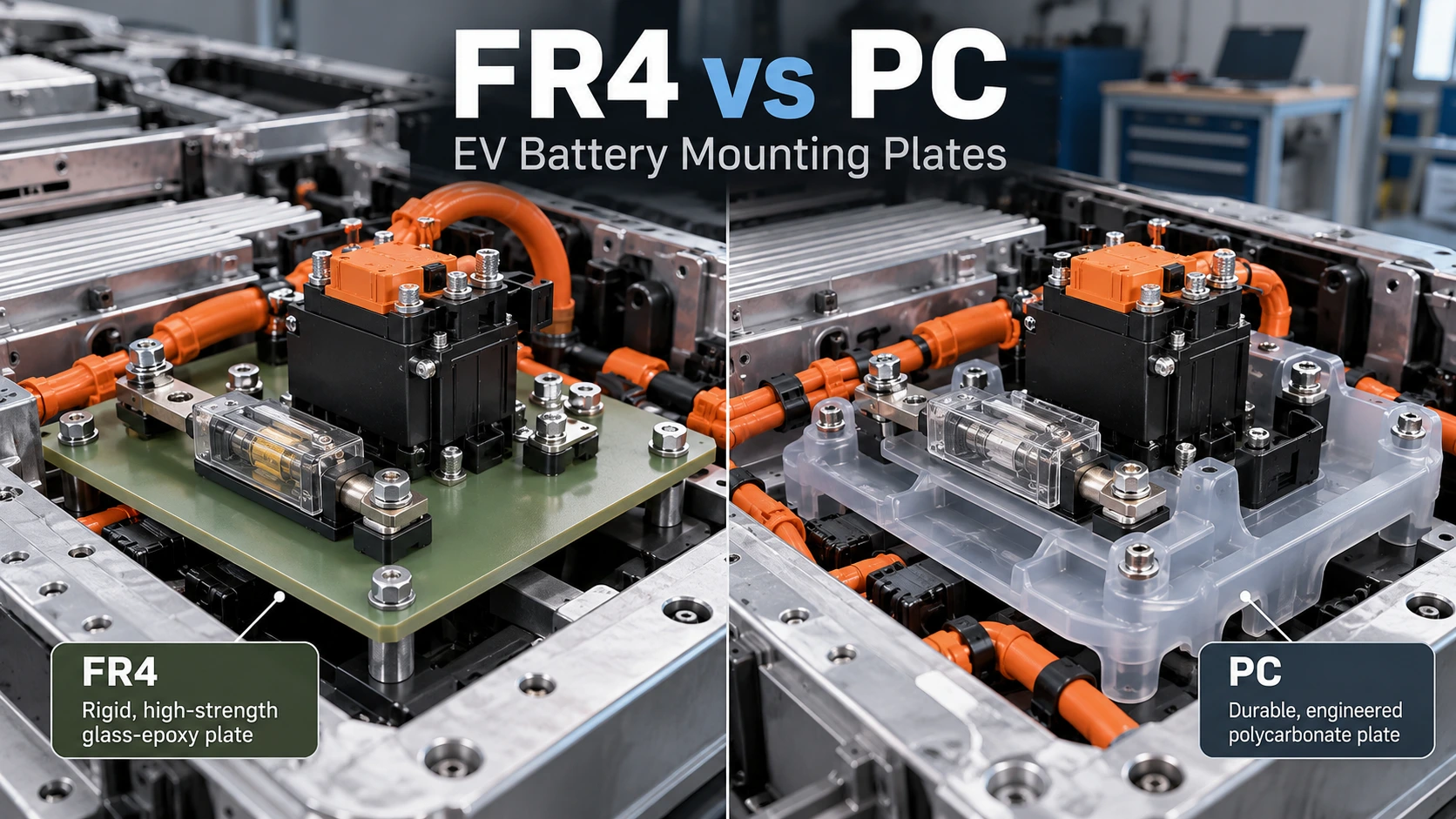
FR4 vs PC for EV Battery Mounting Plates: How to Choose?
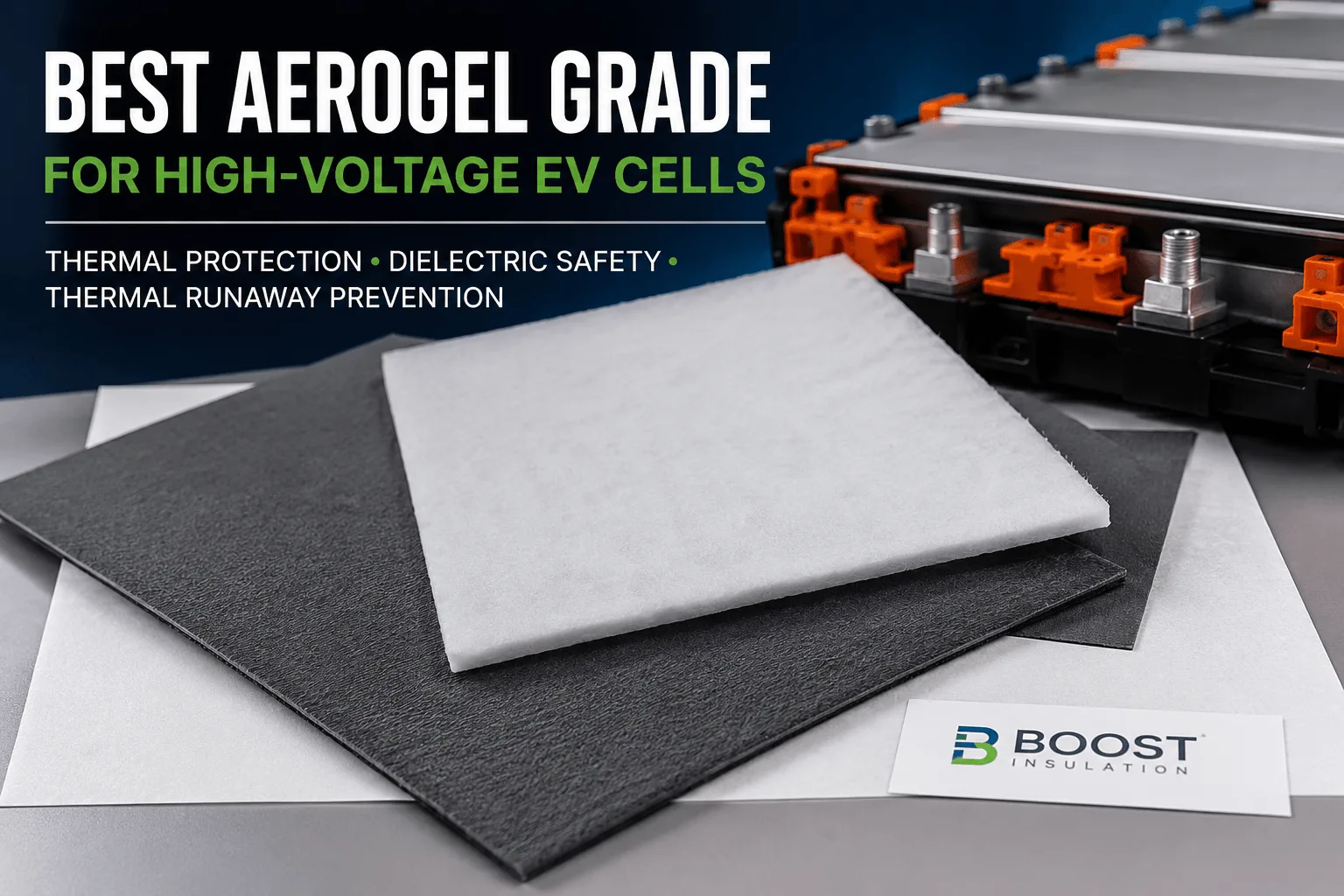
Which Aerogel Grade Is Best for High-Voltage EV Cells?
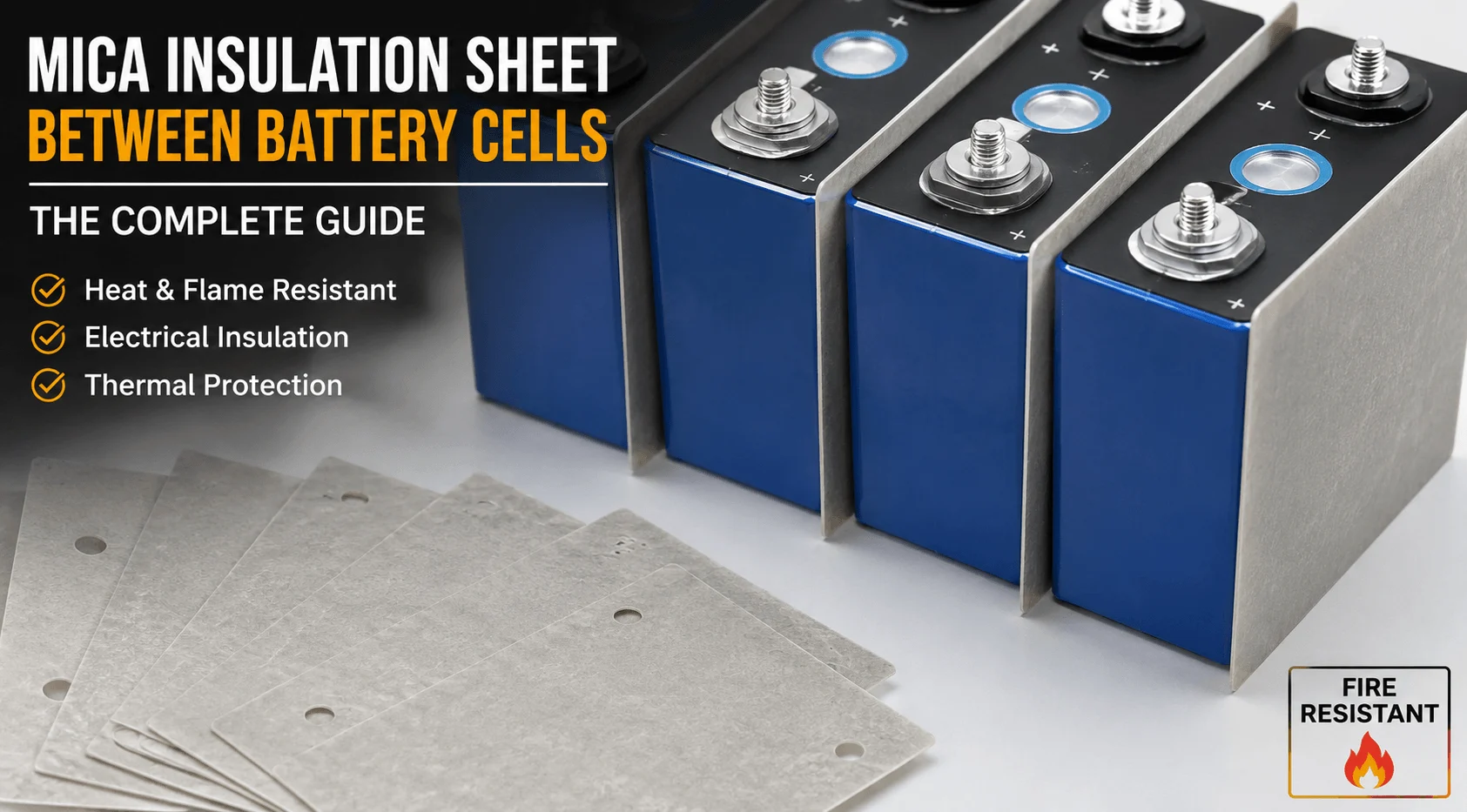
Can a Mica Insulation Sheet Work Between Battery Cells?
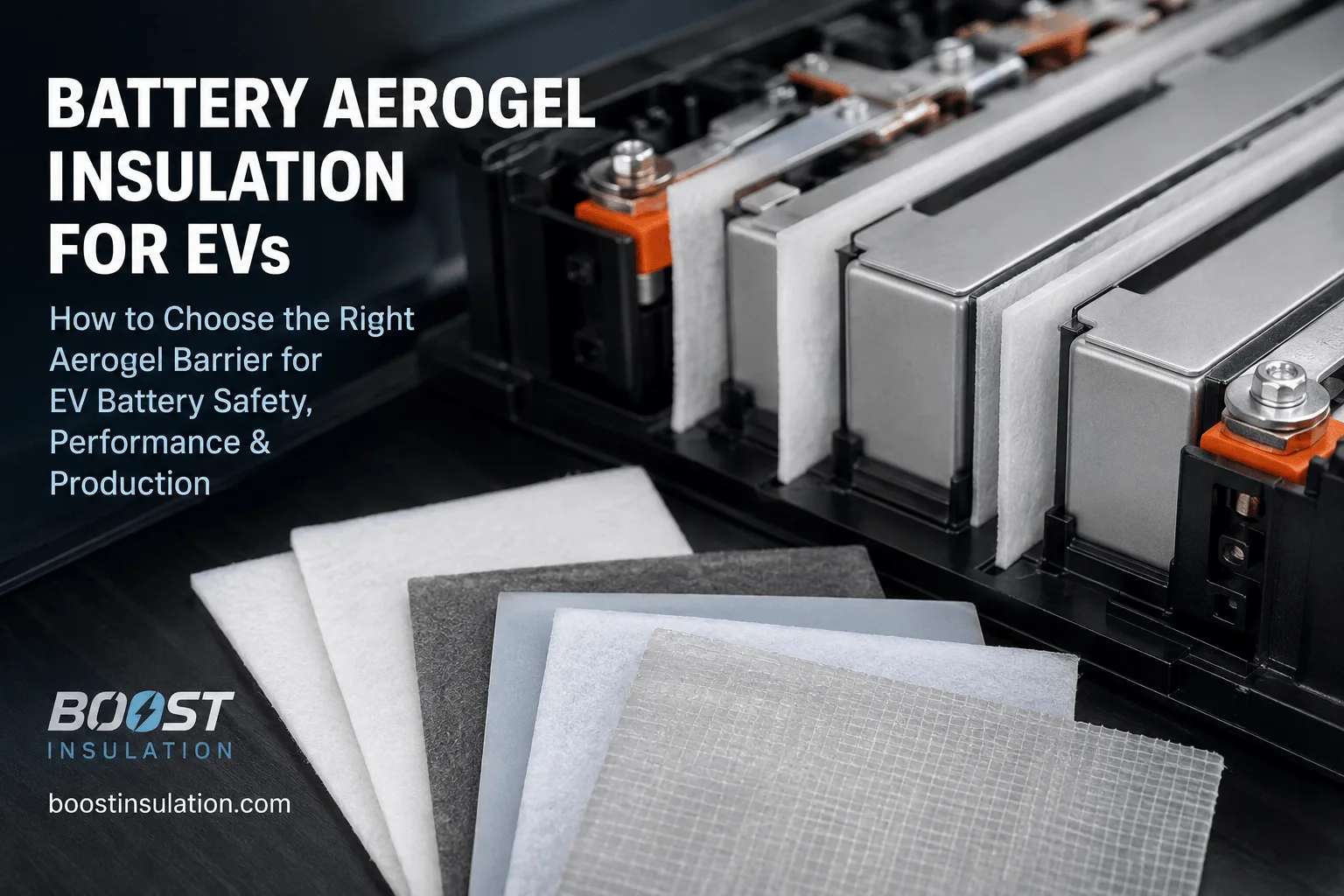
How Do You Choose Battery Aerogel Insulation for EVs?
 betty wong