What Insulation Is Inside a Lithium Battery Module?
Table of Contents
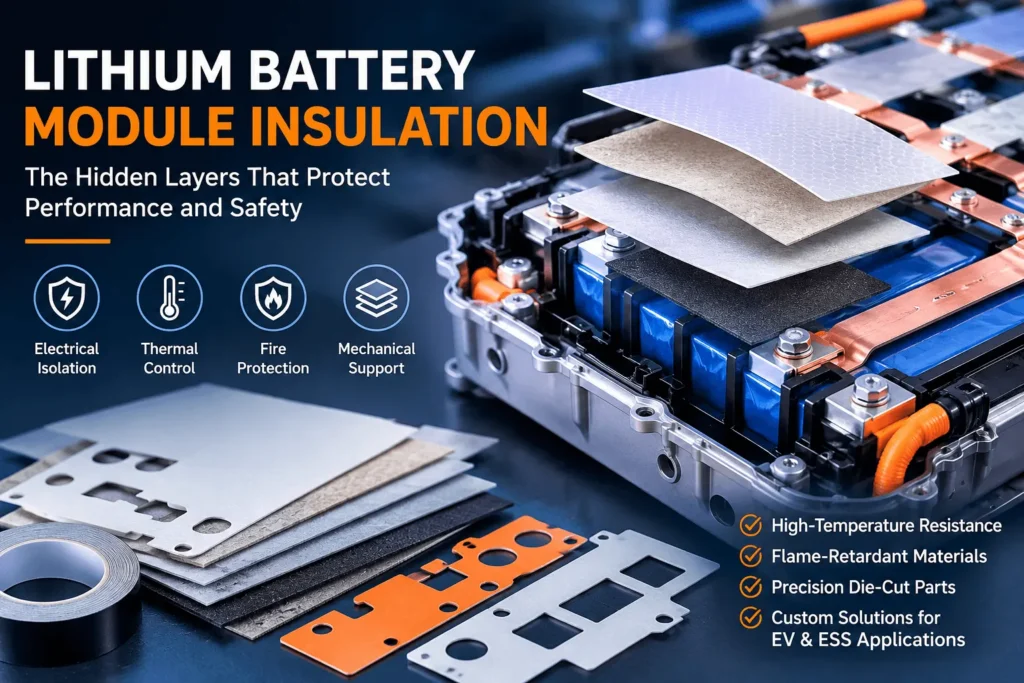
When engineers open a lithium battery module, the most important safety parts are often the thinnest layers: sheets, pads, films and tapes hidden between cells, busbars, end plates and covers. A wrong layer can become a short-circuit risk, a heat bridge or a weak point during thermal runaway. The right insulation stack helps the module stay electrically isolated, thermally controlled and easier to assemble at scale. So, what insulation is actually inside a lithium battery module?
Inside a lithium battery module, insulation usually includes electrical insulation films and sheets, thermal runaway barriers, compression pads, thermal interface materials, adhesive tapes, gaskets and protective covers. Common materials include mica, aerogel, ceramic fiber paper, flame-retardant polycarbonate or polypropylene films, aramid paper, PET or PI films, silicone foam and die-cut adhesive laminates.
For a battery engineer, the more useful answer is this: lithium battery module insulation is not a single material. It is a layered system. Each layer is selected for one or more functions: prevent high-voltage contact, slow down cell-to-cell heat transfer, manage swelling pressure, fill an air gap, protect busbars, guide venting, support automated assembly or keep the module clean during production. This is why a professional insulation supplier should discuss the cell type, voltage, pack architecture, cooling method, flammability target, thickness budget and assembly process before recommending a material. the goal is to convert aerogel, mica, flame-retardant PC, thermal pads, foams and adhesive laminates into accurate, repeatable, battery-ready parts. For EV battery modules, energy storage systems and high-voltage electronics, that conversion step can be as important as the material itself.
Boost Insulation focuses on this engineering gap. Instead of treating insulation as a flat commodity sheet,
Lithium Battery Module Insulation Is a Layered Safety System
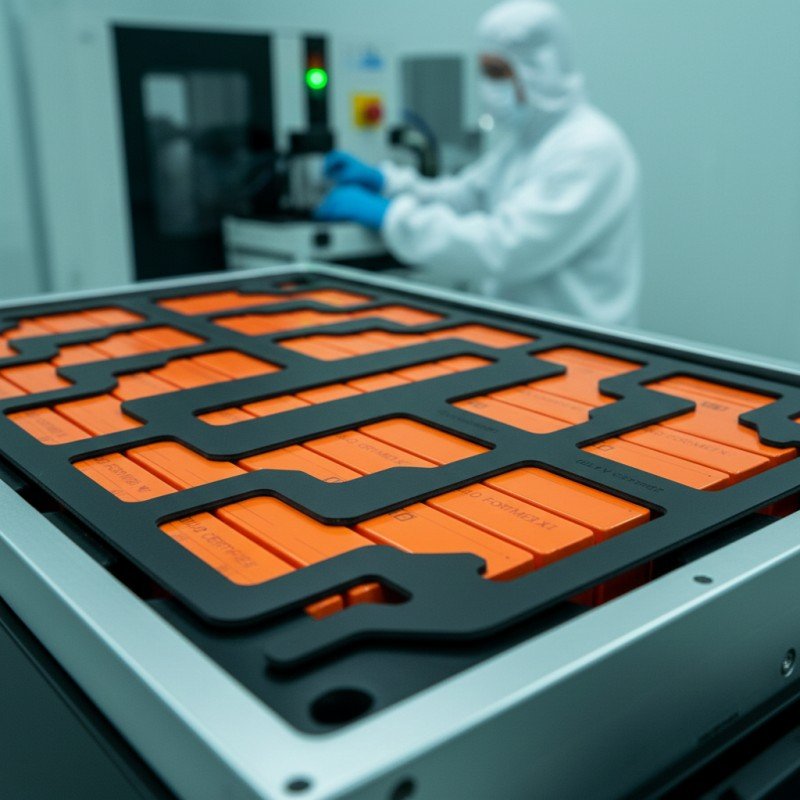
A lithium battery module brings cells, electrical connections, sensors, structural parts and thermal-control parts into a compact package. In most EV and ESS designs, the module must withstand normal cycling, vibration, humidity, fast charging, temperature gradients and potential cell abuse. Insulation sits between these risks and the conductive or heat-sensitive components around them.
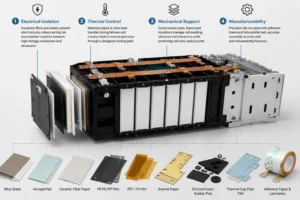
The first function is electrical isolation. A module may include dozens or hundreds of cells connected in series and parallel. Busbars, cell tabs, current collectors, end plates and enclosure parts create many possible contact points. Thin electrical insulation films and sheets are used to prevent accidental contact, reduce arcing risk and maintain isolation between high-voltage conductors and grounded structures.
The second function is thermal control. During normal operation, heat must be removed efficiently through a designed cooling path. During an abnormal event, heat must be blocked or slowed so one failed cell does not rapidly trigger neighboring cells. This creates a common engineering trade-off: the module needs materials that conduct heat in one location and materials that resist heat in another. A thermal gap pad may be selected to move heat to a cold plate, while an aerogel or mica barrier may be selected to slow thermal propagation.
The third function is mechanical support. Cells expand, contract and vibrate. Pouch cells need compression. Prismatic cells need controlled contact pressure and edge protection. Cylindrical cells need spacing, sleeves, top rings and bottom insulators. Foam and elastomeric pads can compensate for tolerances while reducing point pressure that could damage cell cans or pouches.
The fourth function is manufacturability. A battery module is not built with raw sheets placed by hand forever. At scale, insulation must arrive as accurate die-cut parts, often with adhesive, release liners, pull tabs, positioning holes, notches, kiss-cut layers and anti-misassemble features. Good insulation design therefore connects material science with converting and assembly engineering.
Common Insulation Materials Used Inside Lithium Battery Modules
Different OEMs and pack integrators use different material stacks, but the following materials appear frequently in lithium battery module insulation systems. The exact choice depends on cell chemistry, cell format, pack voltage, allowable thickness, compression force, cooling strategy and validation requirements.
| Material | Typical Locations | Why Engineers Use It |
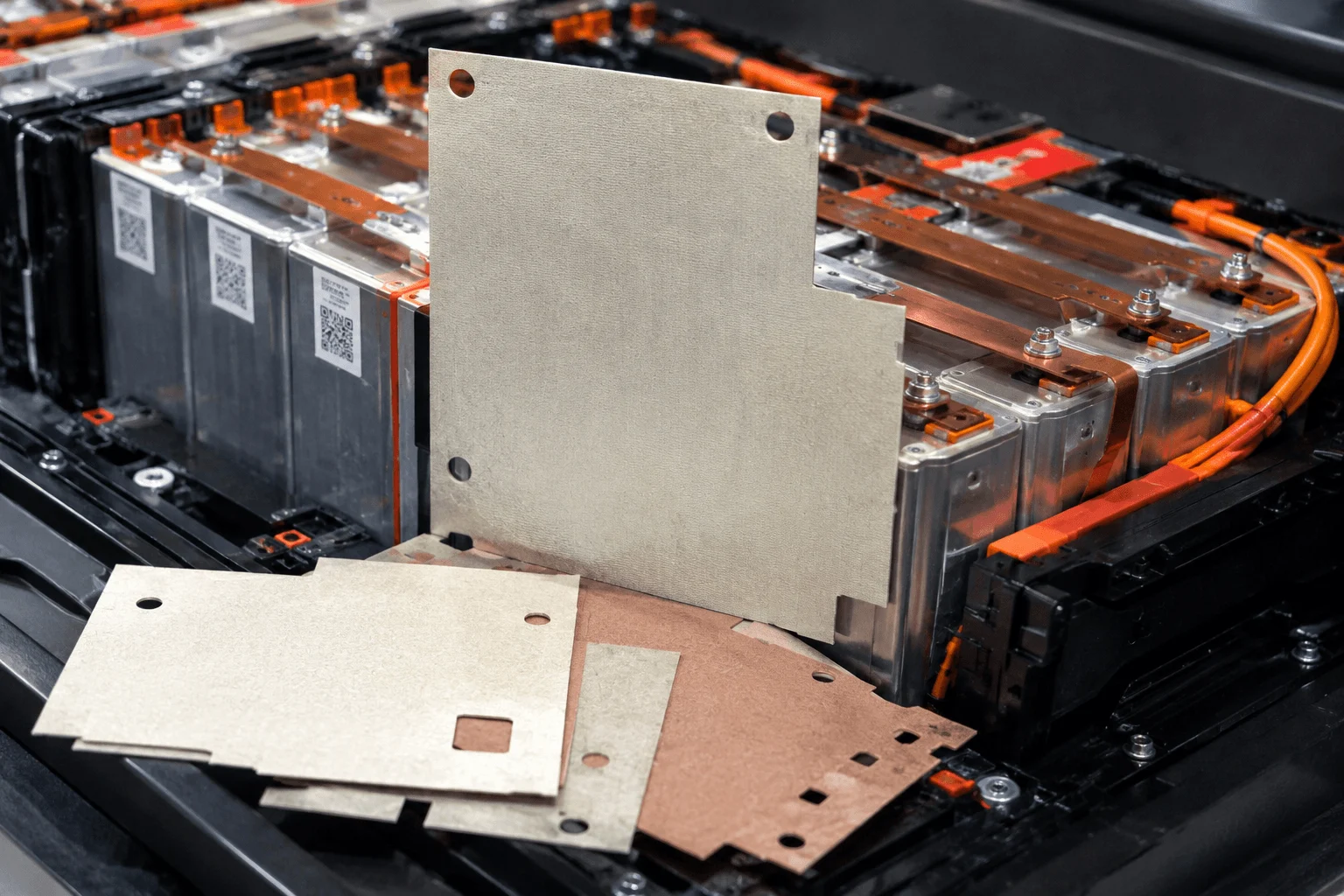
| Mica sheet | Thermal runaway barrier, high-temperature electrical insulation, module cover liner, busbar or terminal shield | High heat resistance, dielectric insulation, flame resistance, good dimensional stability |
| Aerogel pad or felt | Cell-to-cell barrier, module-to-module barrier, pack lid insulation, sidewall thermal shield | Very low thermal conductivity, lightweight, effective where thin thermal blocking is needed |
| Ceramic fiber paper | High-temperature separator, heat shield, flame barrier, backup layer behind mica or aerogel | High-temperature resistance, low thermal conductivity, flexible paper-like processing |
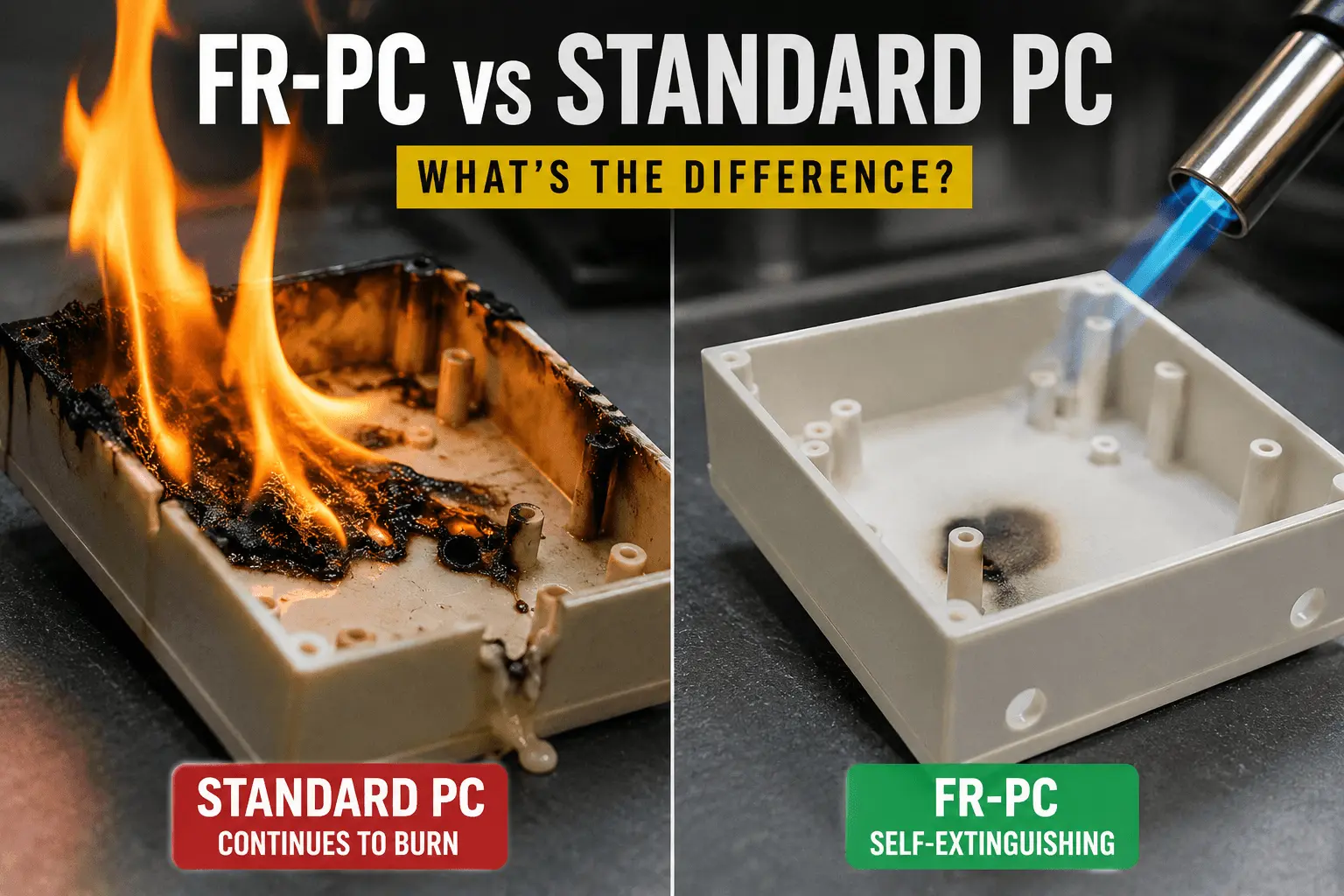
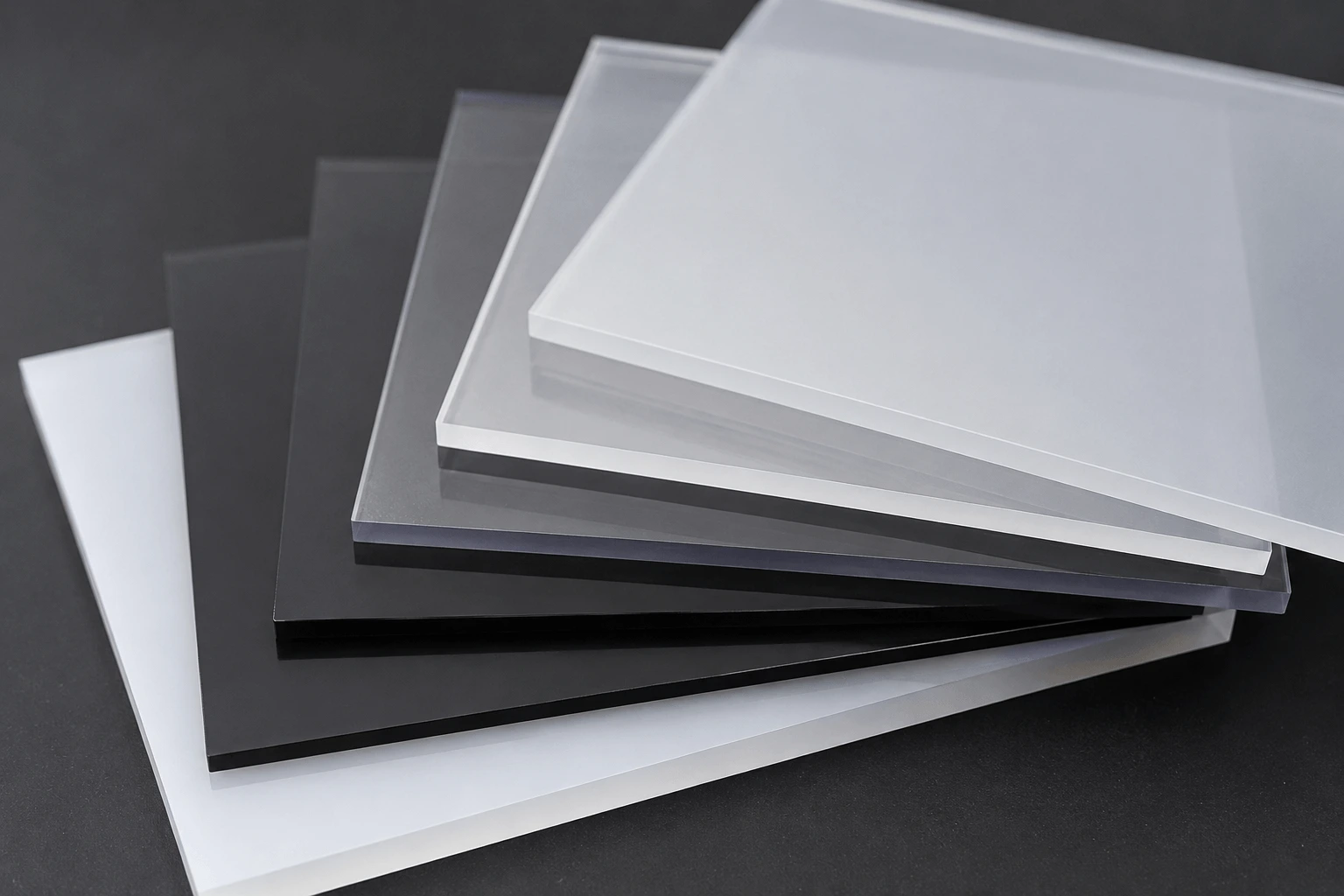
| Flame-retardant PC/PP film | Busbar insulation, dielectric barriers, battery cover insulation, cell spacers, BMS shields | Die-cut and foldable, flame-retardant grades, good dielectric performance, cost-effective for volume |
| PET or PI film | Insulation tape, tab insulation, cell wrapping, sensor or FPC protection | Thin, flexible, electrically insulating; PI is often used where higher temperature capability is needed |
| Aramid paper | Electrical insulation, slot liner, separator layer, protective wrap | Good dielectric strength, heat resistance and tear resistance |
| Silicone foam or rubber | Compression pad, gasket, cushioning, sealing, vibration isolation | Compressible, resilient, can combine cushioning with flame-retardant or thermal insulation properties |
| Thermal gap pad / gel / TIM | Between cells and cold plates, module bottom and cooling plate, power electronics interface | Fills air gaps and improves heat transfer while maintaining controlled electrical behavior |
| Adhesive tapes and laminates | Fixing insulation sheets, assembly aids, cell wrapping, tab or busbar protection | Improves assembly speed, positioning accuracy and layered part integration |
1. Mica Sheet: A Proven High-Temperature Barrier
Mica is one of the most familiar materials in battery pack insulation because it combines electrical insulation with strong high-temperature resistance. In a lithium battery module, mica can be used as a cell-to-cell or module-to-module heat shield, an insulation cover under a busbar, a flame barrier below a module cover, or a protective liner near venting paths. It is especially useful when the design needs a non-combustible or flame-resistant barrier that can remain stable when nearby temperatures rise sharply.
Mica is not always the lightest or most flexible choice, and it may require lamination with adhesive, PET, glass cloth or other layers to improve handling and assembly. This is where precision die-cutting matters. A mica part often needs holes, windows, slots, edge clearances and clean outlines that match the busbar or cell layout. Poor edge quality or cracking can create installation problems, while a well-converted mica part can drop into the assembly with minimal rework.
2. Aerogel: Thin Thermal Insulation for High-Energy Modules
Aerogel insulation is increasingly used when engineers need a thin, lightweight thermal barrier. Its value is low thermal conductivity. In practical terms, an aerogel pad or felt can slow heat transfer from a failing cell to adjacent cells or from a hot module zone to a sensitive component. Aerogel can be used between cells, around modules, under pack lids or in layered barriers where the design needs thermal protection but cannot spare much space.
Aerogel is rarely just cut as a loose fragile sheet. Battery applications often require protective films, scrim, fiberglass support, adhesive layers or encapsulated edges to reduce dusting and improve handling. A good converter should understand how to laminate aerogel without crushing its structure, how to hold tight tolerances, and how to choose release liners that work with the customer’s assembly process.
3. Ceramic Fiber Paper: Heat Shielding in Thin, Flexible Form
Ceramic fiber paper is used as a flexible thermal barrier where high-temperature resistance is more important than mechanical stiffness. It can sit behind mica, work as a flame barrier, line a hot zone, or act as a backup layer in a multi-material stack. The material can be thin and conformable, but like aerogel it requires proper handling, lamination and die-cutting control.
For battery modules, ceramic fiber paper is often considered when the design team is trying to increase thermal propagation delay without adding too much mass. It may also be part of a hybrid design with mica, intumescent layers or films. The key is to validate the complete stack, not just the raw material datasheet.
4. Flame-Retardant PC, PP and Formable Electrical Insulation Films
Not every insulation layer inside a battery module is there to stop a runaway event. Many parts are there to stop everyday electrical problems. Flame-retardant polycarbonate, polypropylene and engineered electrical insulation films are commonly used for busbar covers, BMS shields, cell spacers, end-plate barriers, terminal protectors and folded 3D insulating covers. These materials are popular because they can be cut, creased, bent and formed into accurate parts with low mass.
In volume manufacturing, a flame-retardant film can replace a more expensive molded part when the design allows it. With scoring and folding, a flat die-cut blank can become a protective box, shield or spacer. For the customer, this can reduce tooling cost, shorten development time and simplify inventory. For the battery pack, it can provide dielectric separation exactly where it is needed.
5. PET, PI and Aramid Paper for Thin Dielectric Protection
PET film, PI film and aramid paper are common choices where thin dielectric protection is needed. PET is widely used in tapes, labels, wraps and laminated insulation parts. PI film is often selected where higher temperature resistance and dimensional stability are required. Aramid paper can be used where a paper-like electrical insulation material with good heat resistance and mechanical durability is suitable.
These materials often appear around cell tabs, nickel strips, flexible circuits, sensor locations, module covers and busbar edges. Their job is usually simple but critical: keep conductors separated and protect against abrasion, rubbing, misalignment and accidental contact. Because they are thin, even a small die-cutting error can expose a conductive edge or interfere with assembly clearance.
6. Silicone Foam, Rubber and Compression Pads
Battery cells are not rigid blocks that stay perfectly still. They swell, vibrate and experience dimensional variation. Silicone foam, rubber foam and other compression pads are used to absorb tolerance variation and maintain controlled pressure. In pouch modules, compression management is essential for both performance and lifetime. In prismatic modules, foam or elastomeric pads can prevent hard contact between cell surfaces and structural parts.
Compression pads can also provide a secondary thermal or flame-retardant function, but engineers should not assume every foam is a thermal runaway barrier. The correct question is not simply ‘Is it foam?’ but ‘What is its compression set, working temperature, flammability rating, thickness tolerance, aging behavior and interaction with the cell surface?’ A qualified die-cutting partner should be able to convert the foam cleanly and help laminate it with adhesive or film where needed.
7. Thermal Interface Materials: Conductive, Not Insulating in the Thermal Sense
A common misunderstanding is that all insulation inside a lithium battery module must block heat. In fact, a module also needs thermal interface materials, often called TIMs, to conduct heat away from cells and electronics. Thermal gap pads, gels, thermally conductive silicone sheets, graphite spreaders and thermal adhesive tapes may sit between cells and cold plates or between module bottoms and cooling plates.
These materials fill microscopic air gaps. Air is a poor heat conductor, so a soft thermal pad can improve heat transfer even when the pad itself is not as conductive as metal. Many TIMs also provide electrical isolation, but their main thermal role is heat transfer, not thermal blocking. This is why a battery module can contain both low-conductivity aerogel and high-conductivity gap pads. They serve opposite thermal functions in different locations.
Where Is Insulation Placed Inside a Lithium Battery Module?
The location of insulation is determined by heat paths, electrical paths and assembly paths. A pack designer should map these paths before finalizing any material stack. The following locations are the most common.
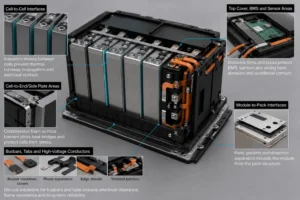
Cell-to-Cell Interfaces
Between cells, insulation may be used to prevent heat transfer, electrical contact and mechanical rubbing. Prismatic and pouch modules often use flat sheets or pads between cell faces. Cylindrical modules may use rings, sleeves, fishpaper-style insulators, spacer pads or barriers between cell groups. If the goal is thermal runaway propagation delay, materials such as aerogel, mica, ceramic fiber or hybrid firewalls may be considered. If the goal is normal heat removal, a thermal interface path to the cold plate may be more important.
Cell-to-End Plate and Cell-to-Side Plate Areas
End plates and side plates can become heat bridges or pressure points. Insulation in these areas may include compression foam, dielectric films, mica barriers or laminated protective pads. The part must match cell swelling behavior and module clamping design. If the pad is too soft, pressure may be lost. If it is too stiff, stress may concentrate at edges or corners.
Busbars, Tabs and High-Voltage Conductors
Busbar insulation is one of the highest-value die-cut applications in a battery module. Conductive copper or aluminum parts require covers, phase separators, edge shields and terminal barriers. Flame-retardant PC, PP, PET, PI, aramid paper, mica and adhesive laminates can all be used depending on voltage, temperature and geometry. Accuracy is important because clearances around holes, weld areas and fastening points must be controlled.
Top Cover, BMS and Sensor Areas
The top of the module often contains voltage sense lines, temperature sensors, flexible printed circuits, BMS boards or harnesses. Thin dielectric films and tapes protect these components from abrasion and accidental contact. In some designs, the top cover also needs a flame barrier or heat shield to prevent upward venting from attacking the cover or electronics immediately.
Module-to-Pack and Pack Lid Interfaces
Insulation does not stop at the module boundary. Module-to-pack interfaces may require pads, gaskets, thermal barriers or dielectric separators between the module housing and pack enclosure. In cell-to-pack and cell-to-chassis designs, this boundary becomes more important because traditional module walls may be reduced. As the structure becomes more integrated, insulation layers often carry more safety responsibility.
Material Choice Depends on Cell Format
There is no universal insulation stack because cell formats create different mechanical and thermal problems. A strong article answer to ‘what insulation is inside a lithium battery module’ should therefore separate prismatic, pouch and cylindrical designs.
Prismatic cells have large flat faces and rigid cans. They often use flat compression pads, side insulation sheets, busbar covers, mica or aerogel barriers, bottom thermal interface pads and top dielectric shields. Since the cells are packaged tightly, small thickness differences can influence stack pressure and module dimensions.
Pouch cells are more flexible and sensitive to pressure distribution. They need controlled compression over broad surfaces, edge protection and careful tab insulation. Foam pads, PET/PI films, aramid paper, thermal interface pads and laminated fire barriers may all be used. Pouch modules may also require more attention to gas swelling and venting behavior.
Cylindrical cells need localized insulation. Common parts include top insulating rings, bottom washers, cell sleeves, spacer frames, fishpaper-style rings, mica plates between cell groups, thermal foams and potting or gap-filling materials. The challenge is often not one large sheet, but thousands of small repeated parts that must be produced with stable dimensions and clean edges.
Cell-to-pack and cell-to-chassis architectures change the insulation question again. Fewer module-level structural walls can improve energy density, but they also reduce passive separation between cells, modules and the vehicle structure. This increases the importance of thin, well-placed thermal barriers, dielectric shields and pack-level fire protection layers. The industry trend is not simply ‘more insulation’; it is smarter placement of insulation with less wasted thickness.
Industry Insight: Thermal Runaway Barriers Are Becoming a Design Requirement, Not an Afterthought
Battery safety regulations and customer validation plans are becoming more focused on thermal propagation. A module is no longer evaluated only by whether it works in normal operation. OEMs and integrators increasingly ask what happens when one cell fails, how long the event is delayed, whether smoke and flame are controlled, and whether passengers or site operators have time to respond.
This shift changes how engineers source insulation. A low-cost film may be acceptable for basic dielectric separation, but it cannot automatically serve as a thermal runaway barrier. A high-temperature barrier may block heat but interfere with normal cooling if placed incorrectly. A thick foam may improve cushioning but reduce energy density. A thin aerogel layer may save space but needs good edge sealing and handling. The practical answer is multi-layer design: combine active cooling for normal heat removal with passive barriers for abnormal events, then validate the full module.
This is also why more customers are asking insulation suppliers for sample speed, documentation, traceability and DFM input instead of only unit price. When a material change can trigger validation work, a supplier must be able to support stable production, consistent raw material sourcing, controlled lamination and repeatable die-cut tolerances. Battery insulation is becoming a risk-management component, not just a consumable.
How to Select the Right Lithium Battery Module Insulation
The best insulation choice starts with a requirements matrix. Before asking for a quotation, engineering teams should define the function of each part. Is the layer blocking voltage, blocking heat, conducting heat, absorbing compression, sealing a gap, locating a part during assembly, or doing several of these at the same time? Once the function is clear, the material selection becomes more rational.
- Electrical requirements: working voltage, dielectric withstand target, isolation resistance, creepage and clearance, arc risk, conductor geometry and edge coverage.
- Thermal requirements: normal operating temperature, peak event temperature, thermal conductivity, thermal diffusivity, heat aging, cooling path and thermal runaway delay target.
- Flammability requirements: UL 94 rating target, self-extinguishing behavior, smoke sensitivity, dripping behavior and customer-specific fire test requirements.
- Mechanical requirements: thickness tolerance, compression force, compression set, puncture resistance, tear resistance, abrasion, vibration and cell swelling behavior.
- Assembly requirements: adhesive type, liner type, tab design, automation compatibility, pick-and-place method, lamination sequence, burr limits and cleanroom expectations.
- Quality requirements: PPAP/APQP expectations, lot traceability, inspection method, material certificates, dimensional reports and change-control process.
One useful rule is to separate material properties from converted-part properties. A datasheet may show dielectric strength or thermal conductivity for the raw material, but the final battery part may include adhesive, protective film, release liner, lamination pressure, cut edges and holes. These changes can affect thickness, insulation distance, handling and performance. For high-volume battery programs, engineers should validate the converted part exactly as it will be delivered.
How Die-Cutting Adds Value to Battery Module Insulation
In early prototypes, a team may cut insulation with a knife or laser, then adjust by hand. That approach is useful for quick learning, but it is not a mass-production solution. Battery module insulation parts need consistent dimensions, clean edges and repeatable assembly behavior. Precision die-cutting converts fragile or flexible materials into reliable production components.
Die-cutting adds value in several ways. It controls the outer profile so the part fits the cell, busbar or housing without trimming. It creates accurate holes and slots for fasteners, weld windows, sensing points and vent paths. It enables kiss-cut release liners so operators can peel and place parts quickly. It supports lamination, combining mica with adhesive, aerogel with protective film, foam with PET, or PC film with double-sided tape. It can also add pull tabs, positioning holes, serialized labels or multi-layer part assemblies.
For a battery customer, this can reduce assembly labor and lower defect risk. For example, a busbar cover with the wrong tolerance can block a welding zone or expose a sharp conductive edge. A thermal pad with poor thickness control can create uneven contact with the cooling plate. An aerogel barrier with damaged edges can shed dust and complicate clean assembly. These are converting problems as much as material problems.
Boost Insulation’s value proposition should therefore be presented around engineering support, material options, 48-hour sample capability, clean die-cutting, lamination, rapid tooling, automotive-quality systems and volume repeatability. The buyer searching this topic is probably not looking for a generic definition only. They may be comparing suppliers who can produce custom battery insulation parts from drawings.
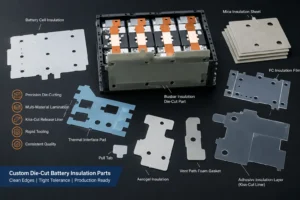
Common Mistakes When Choosing Battery Module Insulation
Mistake 1: Treating Thermal Insulation and Electrical Insulation as the Same Requirement
A material can be electrically insulating but thermally conductive. Another material can be thermally insulating but mechanically weak. A third material can resist flame but be difficult to bond. Engineers should not ask for ‘insulation’ without defining the function. The correct material for a busbar cover may be wrong for cell-to-cell thermal propagation, and the correct thermal barrier may be wrong for a cooling interface.
Mistake 2: Selecting by Raw Material Datasheet Only
Battery modules are validated as assemblies. Adhesive, lamination, cut geometry, compression and installation can change real-world performance. A material that looks strong in a datasheet may fail because the converted part tears during assembly or creeps under pressure. Always validate the final die-cut part.
Mistake 3: Ignoring Thickness Tolerance
A 0.2 mm difference may look small on paper, but in a cell stack it can change compression, welding clearance, cover fit or cooling contact. As energy density increases, thickness budgets become tighter. Stable thickness and clear tolerance control are essential.
Mistake 4: Forgetting Edge and Hole Quality
Battery insulation often sits next to conductive metal. Burrs, cracks, fiber shedding, exposed adhesive or rough edges can create assembly and reliability issues. Clean die-cutting and inspection are especially important for mica, aerogel, ceramic fiber and thin films.
Mistake 5: Using a Flame Rating as a Complete Safety Claim
UL 94 V-0, VTM-0 and other flame ratings are useful material-level references, but they do not prove that a battery module will pass a thermal propagation test. Module safety depends on cell chemistry, state of charge, venting path, cooling design, spacing, barrier placement and enclosure structure. Flame rating is one input, not the final answer.
What Information Should You Send for a Custom Insulation Quote?
A precise inquiry helps the supplier respond with the right material and a realistic quotation. If you need lithium battery module insulation, send as many of the following details as possible:
- 2D or 3D drawing in CAD, DXF, PDF or STEP format, including thickness and tolerance requirements.
- Cell format: prismatic, pouch, cylindrical or custom cell; include cell dimensions and module layout if available.
- Function of the part: electrical insulation, thermal runaway barrier, thermal interface, compression pad, gasket, adhesive spacer or multi-function stack.
- Material preference: mica, aerogel, ceramic fiber, flame-retardant PC, PET, PI, aramid paper, silicone foam, thermal pad or open to recommendation.
- Electrical and thermal requirements: voltage, dielectric strength, flammability target, working temperature, thermal conductivity range and test expectations.
- Assembly requirements: adhesive side, liner type, pull tab, positioning hole, kiss-cut format, roll or sheet delivery, packaging and cleanroom requirement.
- Project stage: prototype, validation build, pilot production or mass production; include estimated annual volume and target lead time.
When these details are clear, the supplier can suggest a stack-up, estimate tooling, prepare samples and identify manufacturability risks before the design is frozen. This is where early DFM is valuable. A small change in corner radius, liner design or adhesive border can make the part easier to assemble and more stable in mass production.
FAQ: Insulation Inside Lithium Battery Modules
What is the main insulation inside a lithium battery module?
The main insulation is usually a combination of dielectric films or sheets, thermal barriers and compression pads. Mica, aerogel, flame-retardant PC/PP films, PET, PI, aramid paper, silicone foam and adhesive tapes are common. The exact stack depends on the module design.
Is mica or aerogel better for battery module insulation?
Mica is often selected for high-temperature electrical insulation and flame resistance. Aerogel is often selected when very low thermal conductivity and lightweight thickness are priorities. Many designs use them in different locations or combine them in a laminated stack.
Does a battery module need thermal insulation if it already has liquid cooling?
Yes, often. Liquid cooling manages normal operating heat, while passive thermal barriers help slow abnormal heat propagation during a cell failure. Cooling and thermal barriers solve different parts of the safety problem.
Can thermal gap pads be called insulation?
They may provide electrical isolation, but thermally they are designed to conduct heat, not block it. They are used to transfer heat from cells to cold plates or housings. This is different from aerogel, mica or ceramic barriers that slow heat transfer.
What insulation is used around battery busbars?
Busbars commonly use flame-retardant PC, PP, PET, PI, aramid paper, mica or laminated adhesive insulation. The part must cover conductive edges, maintain clearance and avoid interfering with welding, fastening or sensing areas.
Why should battery insulation be die-cut instead of manually cut?
Die-cutting improves dimensional accuracy, edge quality, assembly speed and repeatability. It also enables adhesive lamination, kiss-cut liners, positioning features and high-volume production control.
Conclusion: The Best Battery Module Insulation Is Designed Around the Failure Mode
The insulation inside a lithium battery module is a carefully engineered stack of electrical, thermal, mechanical and assembly layers. Mica, aerogel, ceramic fiber, flame-retardant films, aramid paper, PET, PI, silicone foam, thermal pads and adhesive laminates all have a place, but none of them is the universal answer. The right choice depends on what the part must do and where it sits in the module.
For engineers, purchasing teams and battery pack integrators, the key is to define the function first, then select the material and converted-part structure. If the part must prevent short circuits, prioritize dielectric design and coverage. If it must delay thermal propagation, focus on low thermal diffusivity, high-temperature stability and barrier placement. If it must support cooling, choose a thermal interface path. If it must survive mass production, work with a die-cutting supplier that can control tolerances, lamination and quality documentation.
Need custom lithium battery module insulation for an EV or energy storage project? Send your drawing, material target and application details to Boost Insulation. Our team can help compare mica, aerogel, flame-retardant PC film, foam, thermal pads and adhesive laminates, then convert the selected stack into accurate die-cut parts for prototype validation and volume production.
Editor Notes: SEO, Internal Links and Conversion Suggestions
- Approximate article word count: 4252 words (excluding this notes section and cover metadata).
- Use the exact target keyword ‘lithium battery module insulation‘ in the meta description, first 100 words, one H2 and one CTA. Avoid unnatural repetition.
- Recommended internal links: link ‘aerogel insulation‘ to /products/aerogel-insulation/, link ‘thermal management solution’ to /thermal-management-solution/, and link ‘EV battery insulation’ or ‘EV battery module insulation’ to the relevant Boost Insulation product page.
- Recommended CTA placement: add one quote-request CTA after the first material table and another after the conclusion. The strongest CTA is drawing-based: ‘Send your CAD/PDF drawing for DFM review and custom samples.
- Recommended schema: Article schema plus FAQPage schema for the six FAQ questions. Add Product or Service schema only on product pages, not necessarily on this blog post.
- Image suggestions: (1) exploded lithium battery module insulation layers, (2) cell-to-cell aerogel/mica barrier, (3) die-cut busbar insulation cover, (4) thermal pad to cold plate path. Use descriptive alt text with variations of battery module insulation, not repeated exact-match stuffing.
- Lead capture suggestion: include a small request form beside the material table asking for cell type, drawing file, target material, thickness and annual volume. This will qualify inquiries better than a generic contact button.
Technical Reference Notes Used for Accuracy
| Reference | Why It Matters |
| Boost Insulation homepage – https://boostinsulation.com/ | Company positioning, custom EV battery insulation, UL94 V-0 materials, precision die-cutting, 48-hour sampling and automotive-quality messaging. |
| Boost Insulation Aerogel Insulation – https://boostinsulation.com/products/aerogel-insulation/ | Aerogel DFM, material stack-up, thermal insulation and die-cutting process positioning. |
| Boost Insulation Thermal Management Solution – https://boostinsulation.com/thermal-management-solution/ | Thermal pads, gels, mica sheet, insulation sheet, foam and thermal management material categories. |
| RSC Energy Advances review, 2026 – https://pubs.rsc.org/en/content/articlehtml/2026/ya/d5ya00351b | Thermal runaway propagation mechanisms, thermal barriers, aerogel, ceramic fiber and multi-layer mitigation strategies. |
| UL Solutions, Combustion/Fire Tests for Plastics – https://www.ul.com/services/combustion-fire-tests-plastics | UL 94 V, VTM and foam flammability rating context; useful for accurate flame-rating language. |
| Southwest Research Institute, UL 2580 Standard Battery Testing – https://www.swri.org/markets/automotive-transportation/automotive/battery-testing-research/ul-2580-standard-battery-testing | EV battery safety testing categories including electrical, mechanical, thermal and fire-related hazards. |
| Emitech ECE R100 testing – https://www.emitech-group.com/en/your-needs/battery/testing-battery-ece-r100 | Thermal runaway delay and warning measures under ECE R100 Revision 3 context. |
| IDTechEx article on GB 38031-2025 – https://www.idtechex.com/en/research-article/new-standards-put-china-in-the-lead-for-the-safest-and-largest-ev-market/33109 | Industry trend toward stricter thermal runaway safety expectations in China and Europe. |
| ITW Formex EV applications – https://www.itwformex.com/applications/ev | Electrical insulation films for EV battery packs, dielectric strength, flame retardance and formability context. |
Related Posts:
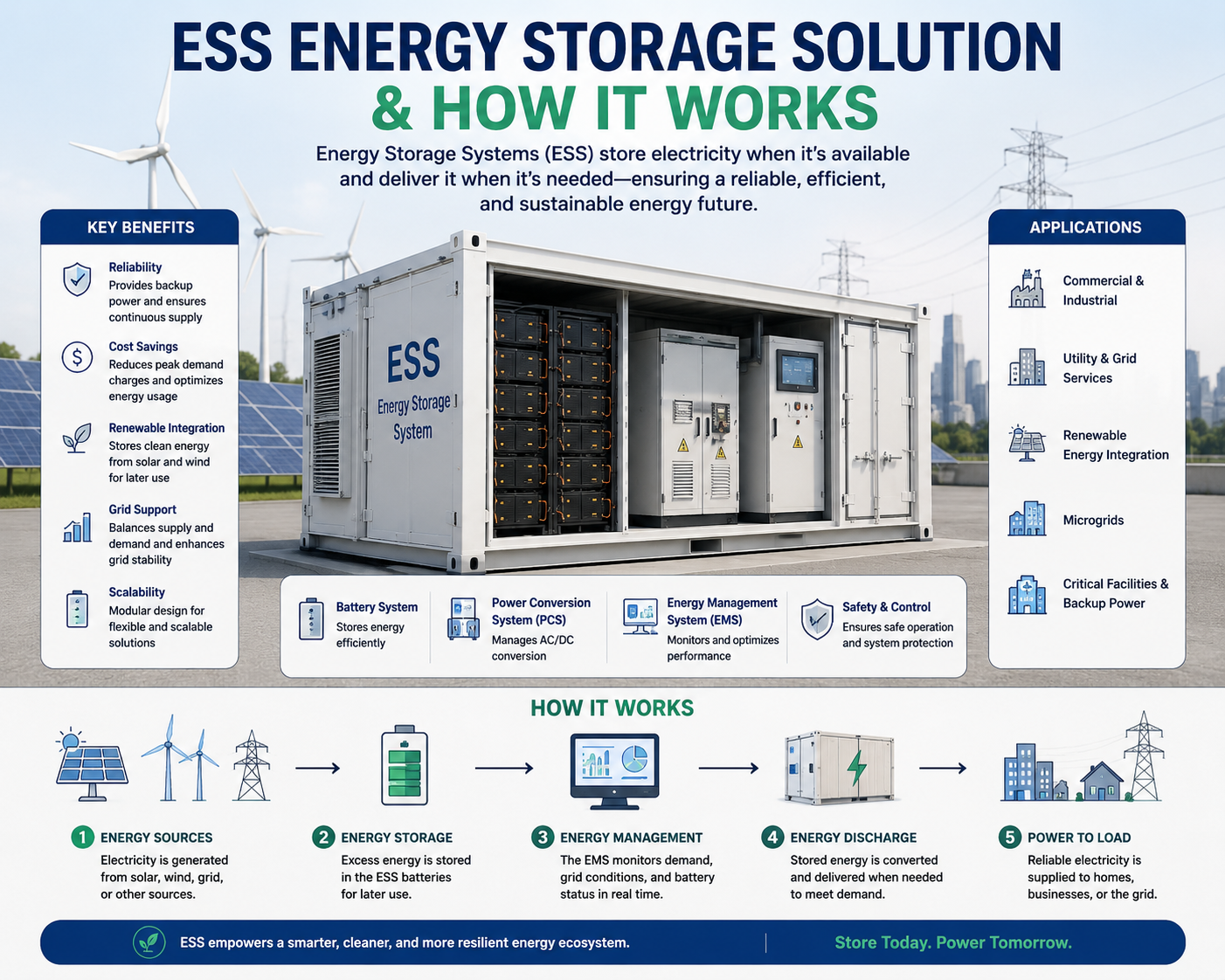
What Is ESS Energy Storage Solution & How It Works?
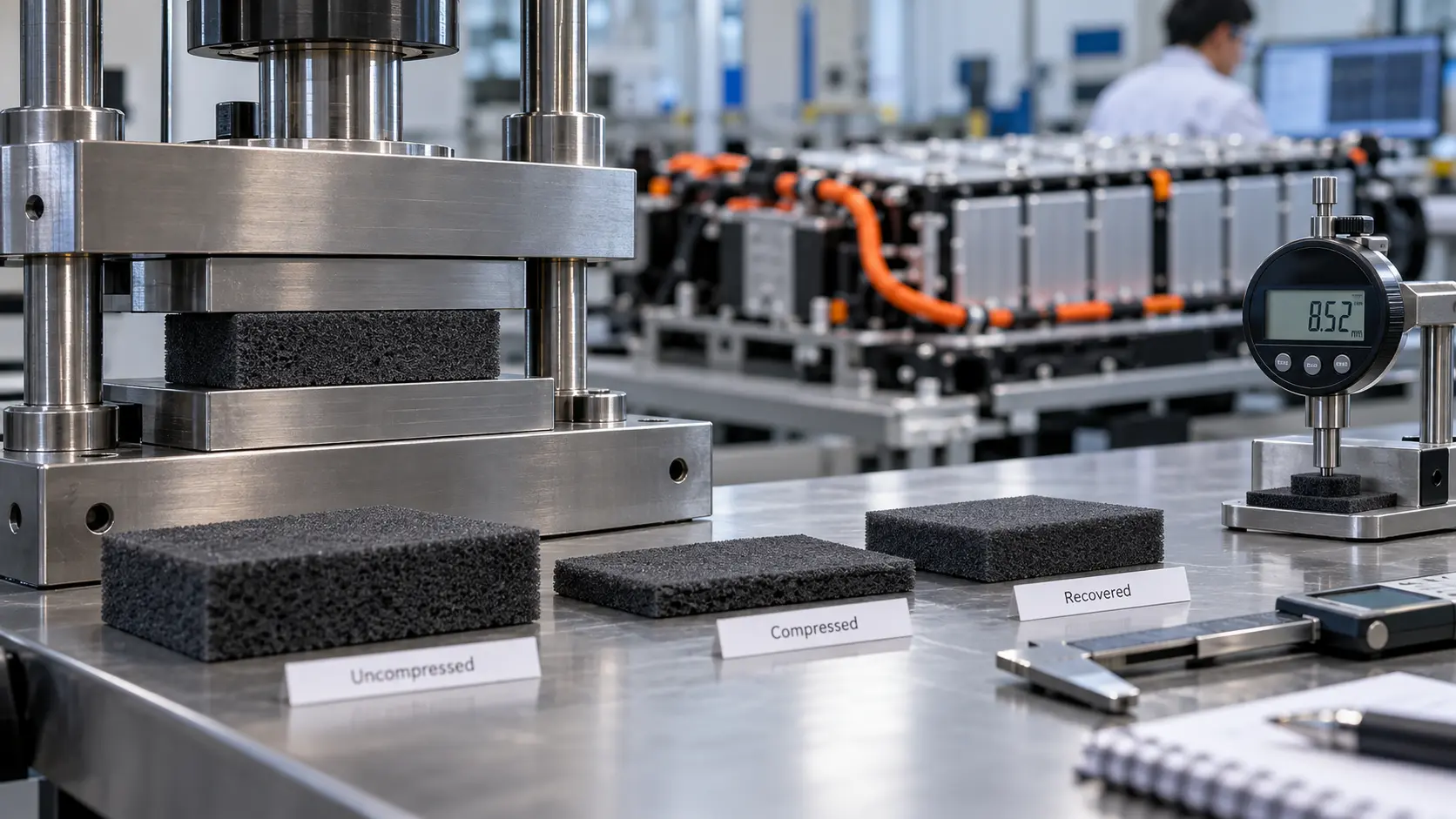
How Do You Test Silicone Foam Recovery in EV Battery Pads?
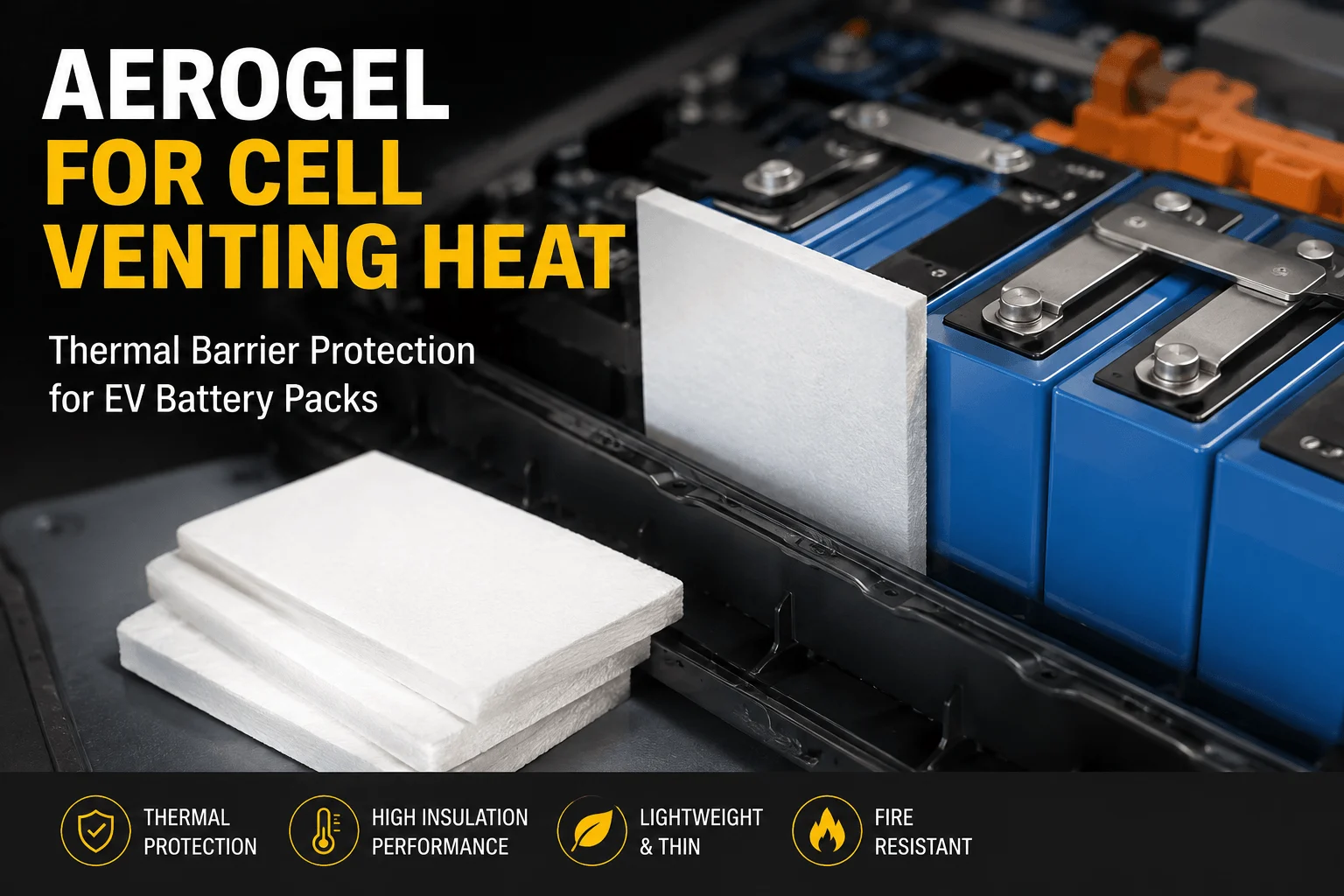
How Does Aerogel Handle Cell Venting Heat in EV Packs?
What’s the Difference Between FR-PC and Standard PC?
What Affects the Price of Flame Retardant Polycarbonate?
What Is a Mica Insulation Sheet for EV Battery Packs?
 betty wong