How Does FR Polycarbonate Compare to Flame Retardant PVC?
Table of Contents
Both FR polycarbonate and flame retardant PVC promise fire safety. But specifying the wrong one for your application can mean the difference between a component that performs flawlessly for a decade and one that warps, cracks, generates toxic smoke, or fails a regulatory audit after six months. If you’ve been evaluating fire-safe materials for an electrical enclosure, a transit vehicle interior, a cable management system, or an industrial housing, you’ve almost certainly encountered both options side by side. On paper, they both check the “flame retardant” box. In practice, they couldn’t be more different — and the gap between them can cost you far more than the price per kilogram.
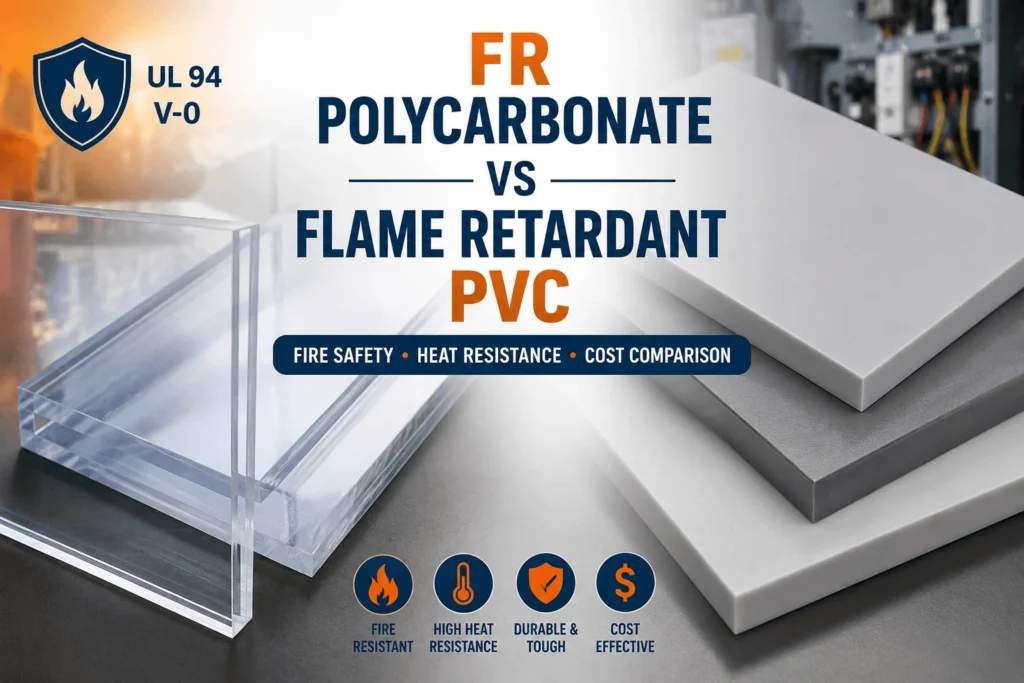
FR polycarbonate and flame retardant PVC both achieve UL 94 V-0 flammability ratings, but diverge significantly across nearly every other performance dimension. FR polycarbonate offers substantially higher impact resistance, superior thermal performance (HDT up to 135°C vs. PVC’s 60–75°C), excellent optical clarity in transparent grades, lower density (~1.20 g/cm³ vs. ~1.40 g/cm³), and halogen-free grade options critical for low-smoke applications. Flame retardant PVC, by contrast, offers lower upfront material cost, excellent chemical resistance, intrinsic UV weather ability, and simpler processing via extrusion or calendaring — advantages that favor cable jacketing, construction profiles, and cost-sensitive commodity applications. The right choice is never automatic: it depends on service temperature, mechanical load, smoke toxicity requirements, regulatory environment, and total life cycle cost.
Understanding the Two Materials: FR PC and FR PVC at a Glance
What Is FR Polycarbonate?
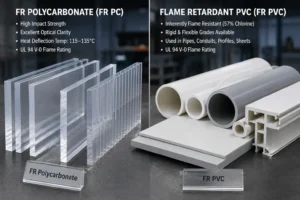
Polycarbonate (PC) is an engineering thermoplastic renowned for outstanding impact toughness, optical transparency, and broad-spectrum thermal performance. Standard PC carries a UL 94 HB rating — adequate for many applications, but insufficient wherever fire safety is regulated. FR polycarbonate incorporates flame-retardant chemistry — either halogenated (brominated) or halogen-free (phosphorus-based, such as BDP) — to elevate performance to UL 94 V-0, the standard self-extinguishing rating required in automotive, electrical, mass transit, and EV applications.
The critical advantage of FR PC over its standard counterpart is that flame retardancy is achieved without crippling the mechanical or optical performance that makes PC valuable. Depending on the grade, FR PC retains notched Izod impact values of 600–900 J/m, heat deflection temperatures of 115–135°C (and higher in glass-fiber-reinforced variants), and light transmission above 88% in transparent grades.
What Is Flame Retardant PVC?
Polyvinyl chloride (PVC) occupies a unique position mong commodity plastics: aits chlorine content (approximately 57% by mass) makes it inherently more flame-resistant than polyolefins. However, standard PVC formulations still require additional flame retardant additives — typically antimony trioxide synergists, phosphate plasticizers, or intumescent systems — to reach UL 94 V-0 performance reliably across all formulations and thicknesses.
FR PVC exists in two broad forms: rigid (RPVC or uPVC), used in pipes, electrical conduit, window profiles, and sheet applications; and flexible (plasticized PVC or PVC compound), used in cable jacketing, wire insulation, flooring, and tubing. The two forms differ dramatically in mechanical performance, temperature tolerance, and smoke characteristics — making generalization about “FR PVC” risky without specifying which form is under consideration.
Flame Retardancy Mechanisms: How Each Material Fights Fire
FR Polycarbonate: Gas-Phase and Condensed-Phase Inhibition
In halogenated FR PC grades, brominated additives release free radicals during combustion that interrupt the radical chain reaction in the flame zone — this is gas-phase inhibition. In halogen-free FR PC grades, phosphorus-based systems act in the condensed phase: they promote char formation at the polymer surface, creating an insulating carbon barrier that slows heat and oxygen transport to the burning substrate.
Both mechanisms produce materials that self-extinguish rapidly when the flame source is removed (V-0 behavior), with relatively low smoke density — particularly in halogen-free grades where there is no hydrogen halide generation. This low-smoke, low-toxicity profile is critical in enclosed environments such as aircraft interiors, mass transit vehicles, and underground infrastructure.
Flame Retardant PVC: The Chlorine Advantage and Its Trade-offs
PVC achieves flame retardancy primarily through the in-situ generation of hydrogen chloride (HCl) gas during thermal decomposition. HCl is a highly effective flame inhibitor in the gas phase — it scavenges the reactive radicals that sustain combustion. This intrinsic mechanism is why standard PVC already outperforms polyethylene or polypropylene in fire resistance without any additive FR system.
The significant downside is smoke toxicity. HCl gas is acutely toxic to humans, and PVC combustion also generates dioxins and furans at elevated temperatures. This is why PVC is prohibited or severely restricted in several fire-sensitive applications — particularly mass transit (EN 45545), aerospace (FAR 25.853), data centers (NFPA 262), and submarine or naval applications. For these uses, low-halogen or halogen-free alternatives — including FR PC — are mandated.
Head-to-Head Performance Comparison
| Performance Parameter | FR Polycarbonate (FR PC) | Flame Retardant PVC (FR PVC) |
| UL 94 Flame Rating | V-0 (standard for most grades) | V-0 (formulation-dependent) |
| Heat Deflection Temp. | 115–135°C (unfilled); up to 155°C (GF) | 60–75°C (rigid); <50°C (flexible) |
| Impact Resistance | Excellent (notched Izod: 600–900 J/m) | Moderate-Good (rigid); Good (flexible) |
| Density | ~1.20 g/cm³ (unfilled) | ~1.35–1.45 g/cm³ |
| Optical Clarity | High (transparent grades >88% transmission) | Generally opaque / translucent |
| Chemical Resistance | Good (acids); limited (ketones, esters) | Excellent (broad chemical tolerance) |
| Dielectric Strength | Excellent (15–20 kV/mm) | Good (10–15 kV/mm) |
| Smoke Density (NBS Ds) | Low (especially HF grades) | Higher; HCl gas risk in halogenated grades |
| UV Resistance | Requires UV stabilizer or hard coat | Good (outdoor-grade formulations) |
| Processing Temp. | 280–320°C (injection molding) | 170–200°C (extrusion / calendering) |
| Material Cost (relative) | Higher (premium engineering resin) | Lower (commodity pricing) |
| Halogen-free options | Yes (phosphorus-based HF grades) | No (PVC is inherently chlorinated) |
Impact Resistance
This is where FR polycarbonate wins decisively. PC is one of the toughest commodity-to-engineering plastics in production, with notched Izod impact values typically 10–20 times higher than rigid PVC. Rigid FR PVC, while adequate for pipe and conduit, shatters under sharp impact — especially at low temperatures. If your application involves mechanical shock loading, vibration, drop risk, or exposure to sub-zero environments, FR PC is the clear specification choice. Flexible FR PVC recovers this ground to some extent, but its softness comes at the cost of structural rigidity.
Thermal Performance
The heat deflection temperature (HDT) gap between FR PC and FR PVC is one of the most consequential performance differences in materials selection. FR PC unfilled grades deflect at 115–135°C under a 1.82 MPa load; glass-fiber-reinforced FR PC grades push this to 150°C or above. Rigid FR PVC deflects at 60–75°C — meaning it begins to soften and creep near temperatures routinely encountered in automotive engine compartments, industrial enclosures, or summer-exposed outdoor installations. Flexible FR PVC has even lower service temperature limits. For any application where component temperatures exceed 70°C, FR PVC is disqualified unless specifically engineered for elevated temperature service.
Smoke Density and Toxicity
In enclosed-space fire scenarios — transit vehicles, aircraft, tunnels, data centers — the smoke and toxic gases generated during a fire event are often more dangerous to occupants than the fire itself. FR polycarbonate (particularly halogen-free grades) produces comparatively low smoke density (measured by NBS Ds per ASTM E662) and generates no hydrogen chloride during combustion. FR PVC, even at low burn rates, generates HCl and elevated smoke density that can be life-threatening in enclosed spaces and corrosive to nearby electronics.
This single factor eliminates FR PVC from consideration in railway rolling stock (EN 45545 HL2/HL3), aerospace cabin interiors (FAR 25.853), naval vessels, and many data center cable requirements (LSZH specifications). For these applications, FR PC or other halogen-free materials are the only compliant option.
Weight / Density
FR polycarbonate at ~1.20 g/cm³ is measurably lighter than both rigid FR PVC (~1.38–1.45 g/cm³) and flexible FR PVC (~1.20–1.35 g/cm³ depending on plasticizer loading). In weight-critical applications — EV battery enclosures, automotive components, aerospace — the density advantage of FR PC directly translates to system-level weight savings and, in EVs, extended range. For static, non-weight-critical applications such as piping or conduit, this advantage is less meaningful.
Chemical Resistance
This is one area where FR PVC genuinely outperforms FR polycarbonate. PVC shows excellent resistance to a broad spectrum of acids, alkalis, and salts — which is why it dominates chemical plant piping, water treatment equipment, and outdoor weathering applications. FR PC has good acid resistance but is vulnerable to strong solvents (ketones, esters, halogenated solvents), concentrated alkalis, and certain fuels. For applications with direct solvent or chemical exposure, FR PVC’s formulation-level chemical resistance is a significant advantage.
Cost Comparison: Upfront Material Cost vs. Lifecycle Value
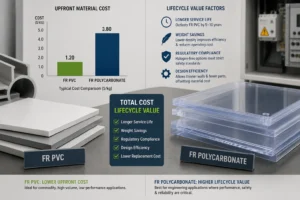
FR PVC is consistently less expensive on a per-kilogram basis than FR polycarbonate — often by a factor of two to four, depending on grade, form, and volume. This cost gap drives PVC’s dominance in commodity applications: cable sheathing, window profiles, flooring, and drainage pipe are produced in quantities where even small per-unit savings compound into significant cost advantages.
However, material cost per kilogram is rarely the right metric for a total cost of ownership analysis. Consider the following lifecycle cost factors:
- Service Life: FR PC components in high-impact, high-temperature applications regularly outlast FR PVC equivalents by 5–10 years, reducing replacement frequency and total ownership cost.
- Weight Savings: In EV and a able value in system efficiency or range. FR PC’s density
- advantage translates directly aerospace applications, every kilogram saved in structural components has a quantify to operating cost savings over the vehicle lifetime.
- Regulatory Risk: Using FR PVC in applications where halogen-free materials are mandated (EN 45545, LSZH cable standards, RoHS-adjacent programs) creates compliance risk that can dwarf any upfront material saving.
- Design Consolidation: FR PC’s higher strength, stiffness, and heat resistance often allow thinner walls, smaller cross-sections, and part count reduction versus PVC equivalents, partially or fully offsetting material cost premiums.
The rule of thumb: for commodity, high-volume, low-performance applications where fire safety is needed but thermal stress, impact, and smoke toxicity are secondary, FR PVC delivers excellent value. For engineering applications where performance failure has safety, regulatory, or operational consequences, FR polycarbonate‘s lifecycle cost case is almost always compelling.
Regulatory and Certification Landscape
Both FR PC and FR PVC operate within an overlapping but distinct certification environment. Key standards to know:
Shared Standards
- UL 94 V-0: The foundational flammability rating for both materials in electrical and electronic applications. Both FR PC and FR PVC can achieve V-0 in appropriate formulations.
- IEC 60695-2-11 / 60695-2-12: Glow wire testing at 650°C and 960°C — relevant for components near heat sources in electrical equipment. FR PC typically passes both levels; FR PVC performance varies by formulation.
- ISO 1210 / ASTM D635: Horizontal burning rate — both materials are compliant across their standard formulations.
Where FR PC Has the Advantage
- EN 45545-2 (Railway Fire Safety): FR PC halogen-free grades meet HL2 and HL3 requirements for smoke density and toxic gas generation. Most FR PVC formulations cannot meet HL2/HL3 due to HCl emission.
- FAR 25.853 (Aerospace): LSZH (low-smoke, zero-halogen) requirements for aircraft cabin interiors favor FR PC and FR PC/ABS blends. PVC is broadly excluded.
- NFPA 262 / UL 910 (Plenum Cable): Requires very low smoke density and flame spread — FR PC-jacketed cables are compliant; standard FR PVC is not.
- UN GTR 20 / EV Battery Safety: Halogen-free requirements in emerging EV battery enclosure standards align with FR PC’s HF grade capabilities.
Where FR PVC Has the Advantage
- IEC 60227 / IEC 60245 (Cable Insulation & Sheathing): PVC is the default material in these widely referenced international cable standards.
- EN 50575 (Construction Products Regulation — Cable): FR PVC is a primary material class across Cca, Dca, and Eca classification tiers.
- BS 6004 / BS 7211 (UK Wiring Regulations): FR PVC is the incumbent material in UK domestic and commercial wiring standards.
Application-by-Application Guide: FR PC or FR PVC?
| Application | Preferred Material | Runner-up | Key Decision Factor |
| EV Battery Enclosures / Covers | FR PC | FR PA66+GF | V-0 + impact + electrical insulation |
| High-Voltage Connectors | FR PC | FR PA66 | CTI, impact, dimensional stability |
| Automotive Interior Trim | FR PC/ABS | FR ABS | FMVSS 302 + aesthetics + processability |
| Cable & Wire Jacketing | FR PVC | FR TPE | Cost, flexibility, extrusion ease |
| Electrical Conduit / Profiles | FR PVC | FR PC | Cost, chemical resistance, UV |
| Building / Construction Panels | FR PVC | FR PP | Cost, weatherability, formability |
| Mass Transit Interiors | FR PC | FR PVC | FST (EN 45545), low smoke toxicity |
| Transparent Safety Glazing | FR PC | N/A | Optical clarity (PVC cannot compete) |
| Medical Device Housings | FR PC | FR ABS | Sterilization resistance, clarity |
| Outdoor Enclosures (low-cost) | FR PVC | FR PC | UV stability, weatherability, cost |
EV and Automotive Components
The shift to battery electric vehicles has fundamentally changed material requirements in automotive applications. High-voltage battery enclosures, BMS housings, onboard charger components, and high-voltage connector housings all demand UL 94 V-0 performance combined with electrical insulation, dimensional stability over wide temperature ranges, and in many programs, halogen-free certification. FR polycarbonate is the preferred material for these applications globally. FR PVC has no meaningful role in EV powertrain components due to its lower thermal performance and halogenated chemistry.
Cable and Wire Management
FR PVC is the dominant material in cable jacketing and wire insulation globally — a position it has held for decades due to its cost, processability, and broad regulatory acceptance. For most standard power cables, control cables, and instrumentation wiring in industrial and commercial environments, FR PVC remains the appropriate and cost-effective choice. FR PC only enters cable applications where LSZH performance is specifically mandated — typically mass transit, data center, and high-density building applications — and even then, FR PC usually appears in the conduit, tray, or enclosure rather than the cable jacket itself.
Mass Transit and Rail Interiors
EN 45545-2 has transformed material selection in European rail applications. The standard’s rigorous requirements for heat release rate, smoke density (SMOGRA), and toxic gas generation effectively disqualify standard FR PVC from HL2 and HL3 applications — which include most passenger compartment components in metro, intercity, and high-speed rail vehicles. FR polycarbonate (particularly halogen-free grades) and FR PC/ABS blends are the materials of choice for seat components, interior trim panels, overhead storage, and lighting covers in modern rail vehicles.
Building and Construction
FR PVC is deeply entrenched in building and construction: window profiles, cladding, flooring, drainage systems, and electrical conduit. For these applications — where chemical resistance, UV stability, weatherability, and cost are primary drivers and where mechanical performance requirements are relatively modest — FR PVC is difficult to displace. FR polycarbonate finds its niche in building applications primarily in transparent or translucent elements: glazing panels, skylights, safety barriers, and architectural lighting — where optical clarity and impact resistance justify the higher material investment.
Processing and Fabrication Considerations
FR PC and FR PVC are processed by fundamentally different manufacturing methods, which affects both equipment requirements and design freedom:
FR Polycarbonate Processing
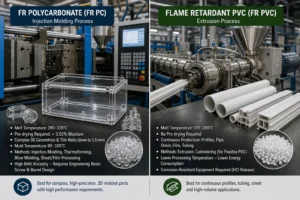
FR PC is processed primarily by injection molding at melt temperatures of 280–320°C, enabling complex three-dimensional geometries, tight dimensional tolerances, and thin-wall sections down to 1.0 mm. Mandatory pre-drying to below 0.02% moisture content is required to prevent hydrolytic degradation. FR PC can also be thermoformed, blow-molded, and processed into sheet or film. Its high melt viscosity demands screw and barrel designs suited to engineering resins, and mold temperatures of 80–100°C are typically needed for optimal surface quality.
FR PVC Processing
Rigid FR PVC is typically processed by extrusion at temperatures of 170–200°C, producing profiles, pipe, sheet, and film in continuous lengths — an inherently different output form from injection-molded PC. Flexible FR PVC is processed by extrusion and calendaring. The lower processing temperature reduces energy consumption and equipment cost, but also limits the geometric complexity achievable versus injection-molded FR PC. PVC tooling and screw/barrel designs must be corrosion-resistant due to the HCl that can be liberated during processing.
The practical implication: if your application requires complex three-dimensional molded parts, FR PC’s processability advantage is substantial. If your application requires continuous profiles, tubing, or sheet in high volume, FR PVC’s extrusion-based processing is more economical and better established.
Environmental and Sustainability Considerations
Sustainability considerations are increasingly shaping material selection decisions at OEM, Tier 1, and end-user levels — and both FR PC and FR PVC face scrutiny under different frameworks.
- FR PVC and halogen concerns: The chlorine chemistry that makes PVC flame-retardant also creates environmental challenges at end of life. Incineration of PVC generates dioxins and furans under incomplete combustion conditions. Several European countries have restricted or voluntarily phased out PVC in specific applications (notably flooring, wall coverings, and wire insulation in some markets). The EU’s REACH regulation and RoHS directive have progressively restricted certain PVC plasticizers (phthalates) and some organotin stabilizers used in PVC formulations.
- FR PC and recyclability: Halogen-free FR polycarbonate is generally more favorable from a combustion toxicology and end-of-life perspective than halogenated materials. PC is thermally recyclable, and several resin manufacturers have introduced post-consumer or post-industrial recycled FR PC grades that maintain performance specifications — an important consideration for automotive and electronics programs with declared sustainability targets.
- Halogen-free is the trend: Across automotive (particularly EV programs), electronics (RoHS, WEEE directives), rail (EN 45545), and data infrastructure, the trend away from halogenated flame retardants in favor of phosphorus-based, nitrogen-based, or mineral-based systems is clear and accelerating. For new product design programs with a 5–10 year horizon, specifying halogen-free FR PC now avoids potential reformulation and requalification costs later.
5 Key Questions to Ask Before You Specify Either Material
Use this decision framework to cut through the comparison noise and reach the right specification for your specific application:
- What is the peak service temperature? If it exceeds 70°C, FR PVC is likely off the table for structural components. If it exceeds 120°C, only GF-reinforced FR PC or higher-performance engineering polymers are viable.
- What are the smoke and toxicity requirements? Does your application involve enclosed spaces, rail vehicles, or aerospace? If so, consult EN 45545, FAR 25.853, or LSZH cable standards. FR PVC will almost certainly fail these requirements.
- What mechanical loads will the component see? Impact, vibration, or drop loading strongly favor FR PC. Static, low-load applications (piping, cable jacket) are well-served by FR PVC.
- Is halogen-free specification required? Many OEM programs, particularly in EV and rail, explicitly mandate halogen-free materials. FR PVC cannot satisfy this requirement. FR PC in phosphorus-based HF grades is the solution.
- What is the true total cost of ownership? Include service life, replacement frequency, regulatory compliance risk, weight-related energy or efficiency impacts, and design consolidation opportunities — not just raw material price per kilogram.
Work With a Material Expert Who Knows Both
The FR polycarbonate vs. flame retardant PVC decision is rarely black and white. In many real-world programs, both materials appear — FR PC in structural, high-temperature, or enclosed-space components, FR PVC in cable management, conduit, or cost-sensitive commodity elements elsewhere in the same system. Getting both specifications right — including the grade, form, and processing route for each — requires a supplier partner who understands not just the headline data sheet values but the application-specific interactions that determine long-term performance.
When selecting a supply partner for either material, look for:
- Technical application support: engineering teams who review your design, service conditions, and regulatory environment — not just the product catalog.
- Broad material portfolio: access to both FR PC and FR PVC grades across multiple suppliers and formulations, enabling direct comparison and objective recommendation.
- Certification and documentation support: third-party test reports, UL Yellow Card data, EN 45545 compliance dossiers, and PPAP-ready documentation for automotive and industrial programs.
- Competitive supply chain: local or regional inventory, reliable lead times, and volume pricing that makes FR PC economically viable for your program scale.
- Custom compounding capability: the ability to tailor FR PC or FR PVC formulations for specific requirements — color, filler level, stabilizer package, or additive system — when standard grades don’t fully satisfy your specification.
Our materials team has supported hundreds of qualification programs across automotive, rail, electronics, and industrial markets. Whether you are deciding between FR PC and FR PVC for the first time, switching from one to the other after a design revision, or optimizing an existing supply chain, we provide the technical depth and supply reliability to make the right material decision — and execute it.
Conclusion: FR Polycarbonate vs. Flame Retardant PVC — Know Your Application
The comparison between FR polycarbonate and flame retardant PVC is ultimately a question not of which material is “better” in the abstract, but of which material is right for your specific combination of performance requirements, regulatory constraints, processing capabilities, and commercial realities.
FR polycarbonate wins on impact resistance, thermal performance, optical clarity, weight, and smoke safety. It is the non-negotiable choice for EV battery systems, high-performance electrical components, rail and transit interiors, and any application where halogen-free certification or low smoke toxicity is specified.
Flame retardant PVC wins on material cost, chemical resistance, ease of extrusion processing, UV weatherability, and established regulatory acceptance in cable and construction markets. It remains the most practical and economical choice for wire jacketing, conduit, building profiles, and commodity packaging where its limitations don’t conflict with application requirements.
The most common and costly mistake in materials selection is treating this as a cost-only decision — and discovering mid-production or post-launch that the cheaper material couldn’t meet the thermal, safety, or regulatory demands of the application. Getting the specification right the first time is always the lowest-cost outcome.
Speak With Our FR Polycarbonate Experts — Request a Free Application Review & Custom Quote →
Related Posts:
Where Is Aerogel Used Inside Modern EV Battery Packs?
What Makes Aerogel Effective Between Battery Cells?
What Are the Main Components Inside an ESS Storage Solution?
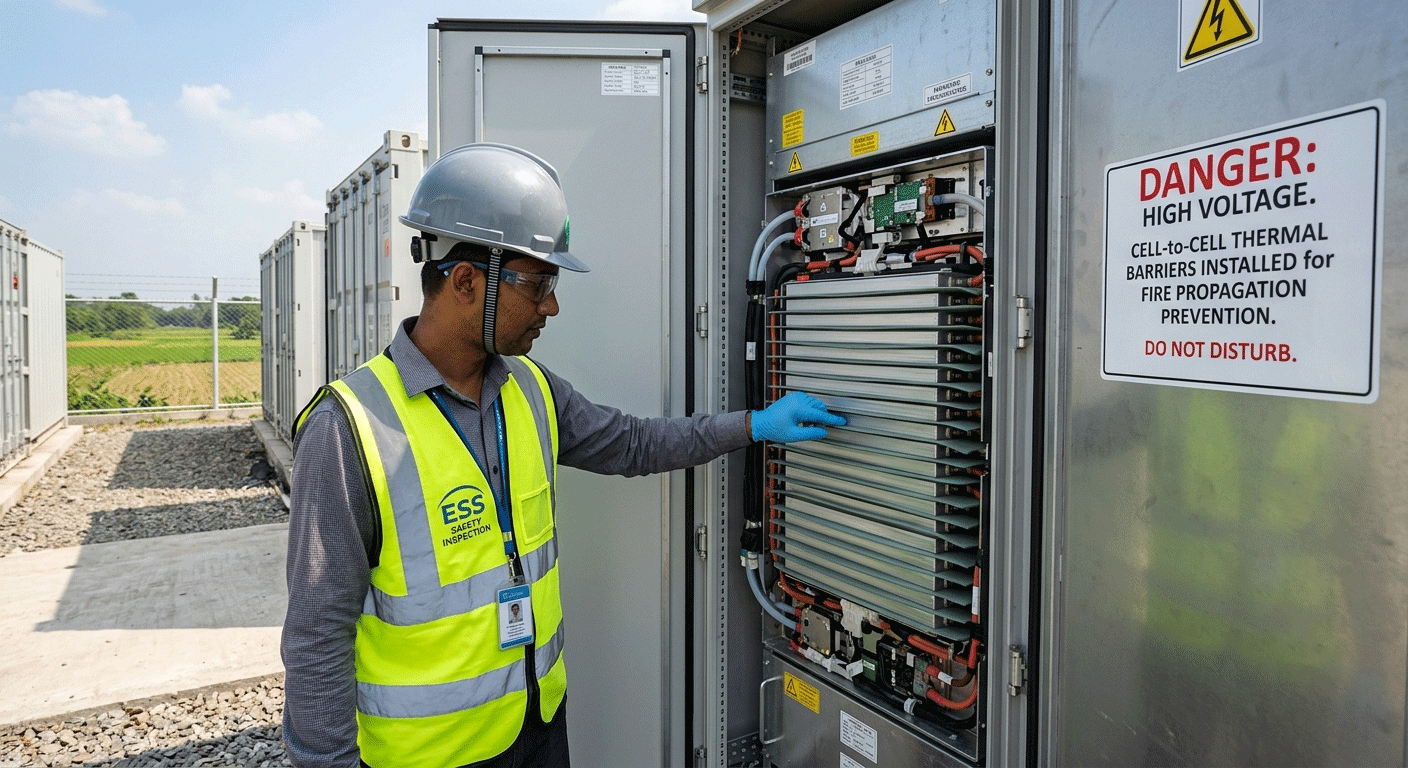
How Does Cell-to-Cell Thermal Barrier Improve ESS Safety?
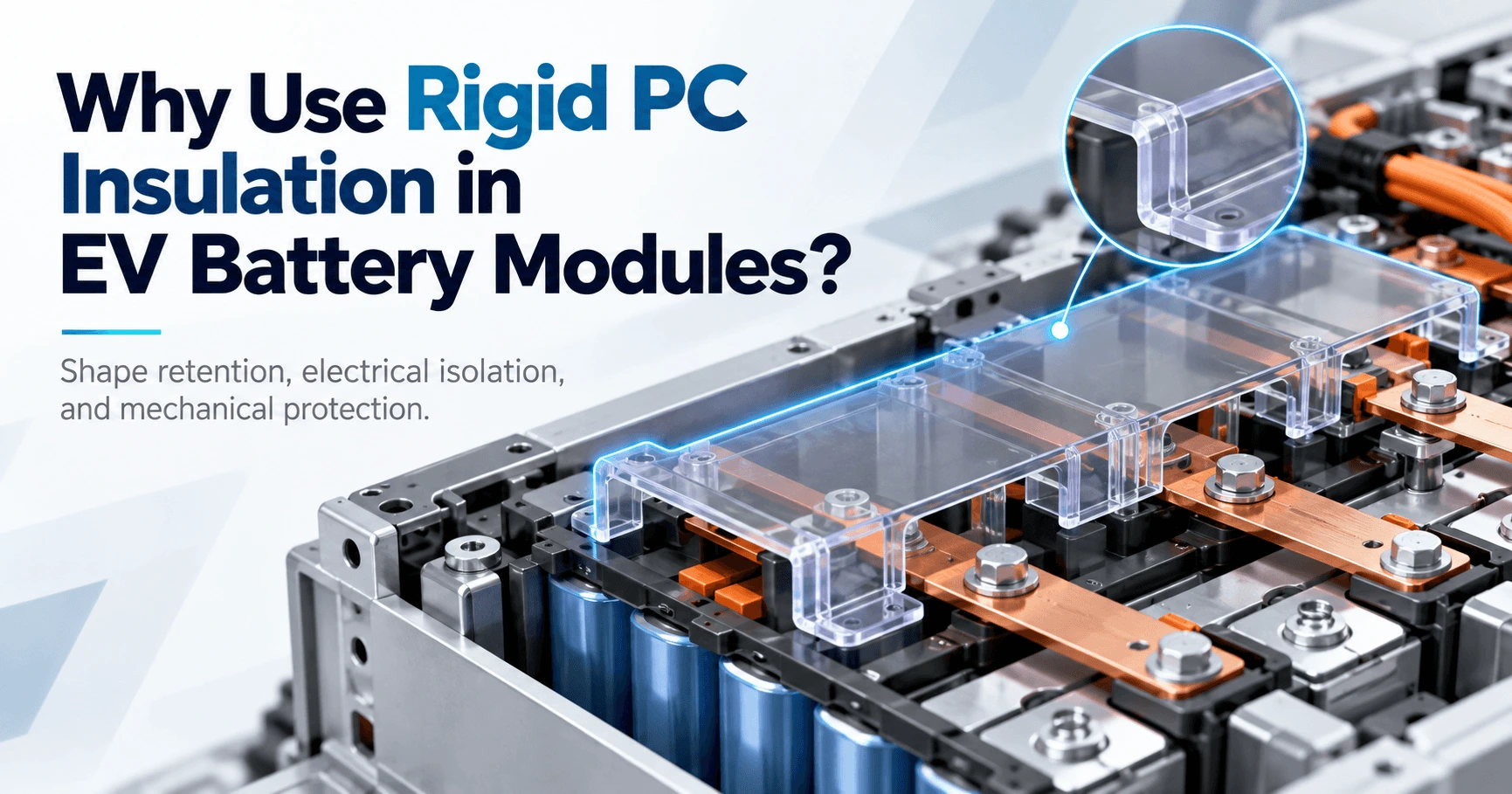
Why Use Rigid PC Insulation in EV Battery Modules?
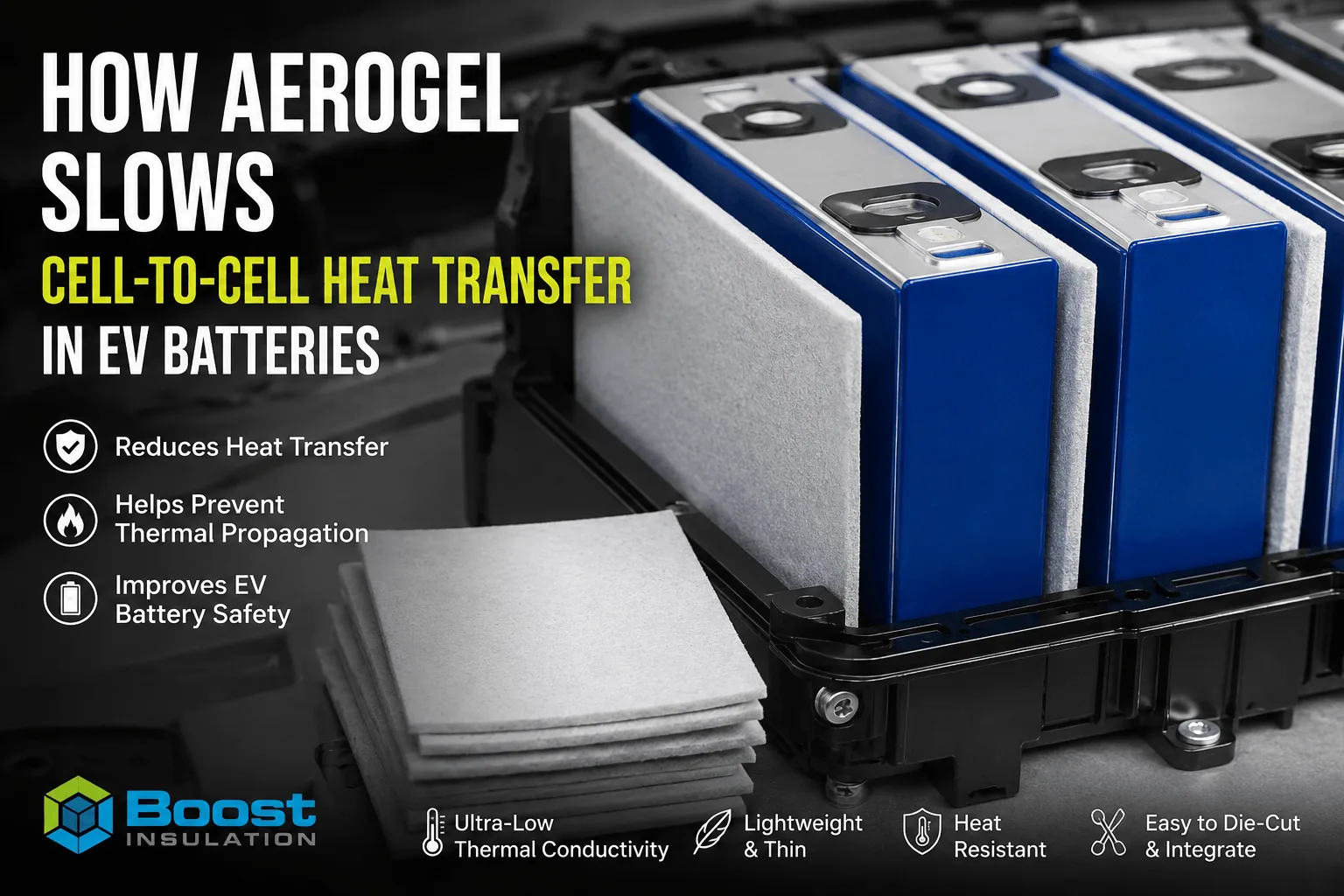
How Does Aerogel Slow Cell-to-Cell Heat Transfer in EVs?
 betty wong